here is what's in store for you this week:
(estimated reading time: 9 min)
The anti-colonial legacy of a murdered Ukrainian reporter that shaped me who I am today and how his work from 25 years ago explains threats to our democracies beyond Ukraine more than you’d expect.
Three days in Almaty in December 1986 that cracked the Soviet empire three years before the fall of the Berlin wall and their often underreported anti-colonial nature.
Moscow switched the Qazaq script twice in a decade to make it look like russian. But now treats Qazaqstan switching back as an act of aggression.
The year they murdered Georgiy Gongadze, I decided to become a journalist.
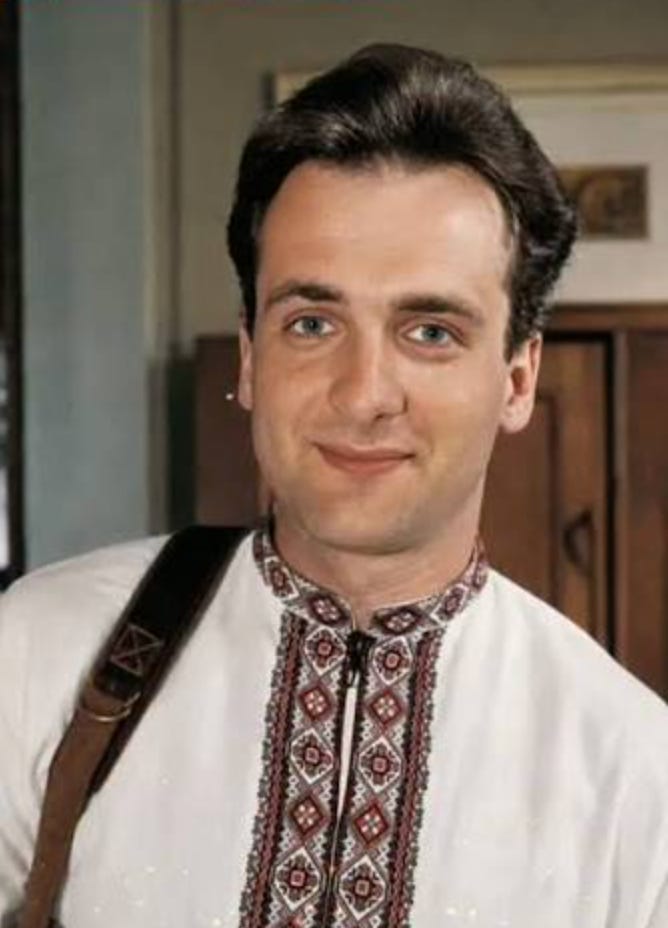
He was an enigma for my generation of kids growing up in 1990s Ukraine: young, handsome and a badass reporter. Unapologetically patriotic, too, which was still counterculture in a country that had restored independence after seventy years of russian colonial occupation, but hadn’t even started decolonising yet. Plus, like me, he was Ukrainian with Georgian roots. He was my icon.
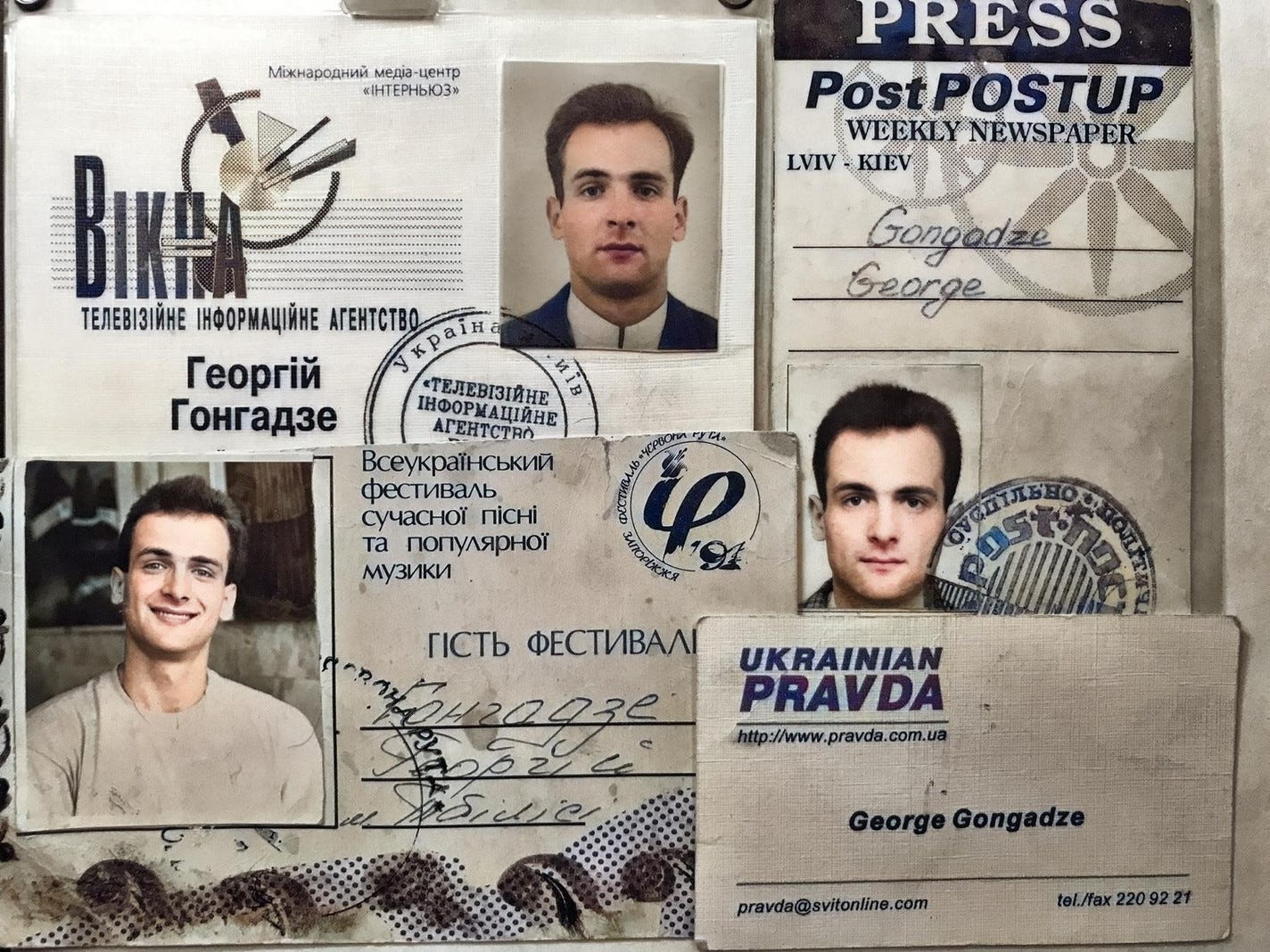
Then, he disappeared on 16 September 2000, aged 31, months after founding Ukraïnska Pravda — a newsroom that has been a pillar of Ukrainian democracy ever since. (Which is why working with them on the Russian Colonialism 101 audio show was quite an honour for me.) On 2 November, a man walking in the Tarashcha forest outside Kyiv found a headless body. Ukraine’s ruling elites at the time ordered his murder. One likely assassination organiser, Ukraine’s former interior minister, killed himself and four more were imprisoned. Yet no one has yet been charged with giving the order.
Gongadze’s murder remains one of the most traumatic events in modern Ukrainian history. It also launched a powerful public pushback that eventually resulted in the pro-democracy Orange Revolution in 2004 - the first revolution I participated in.
So when my dad learned I wanted to go into journalism because of Gongadze, he gasped: “Why would you want to end up like him?!”
It felt to me like if kids my age start being scared of becoming journalists, the tyranny wins. It is okay to be scared. It is not okay to let fear rule you. Teenage rebellion, generational Ukrainian stubbornness over freedom, whatever it was — I followed his example and never regretted it.
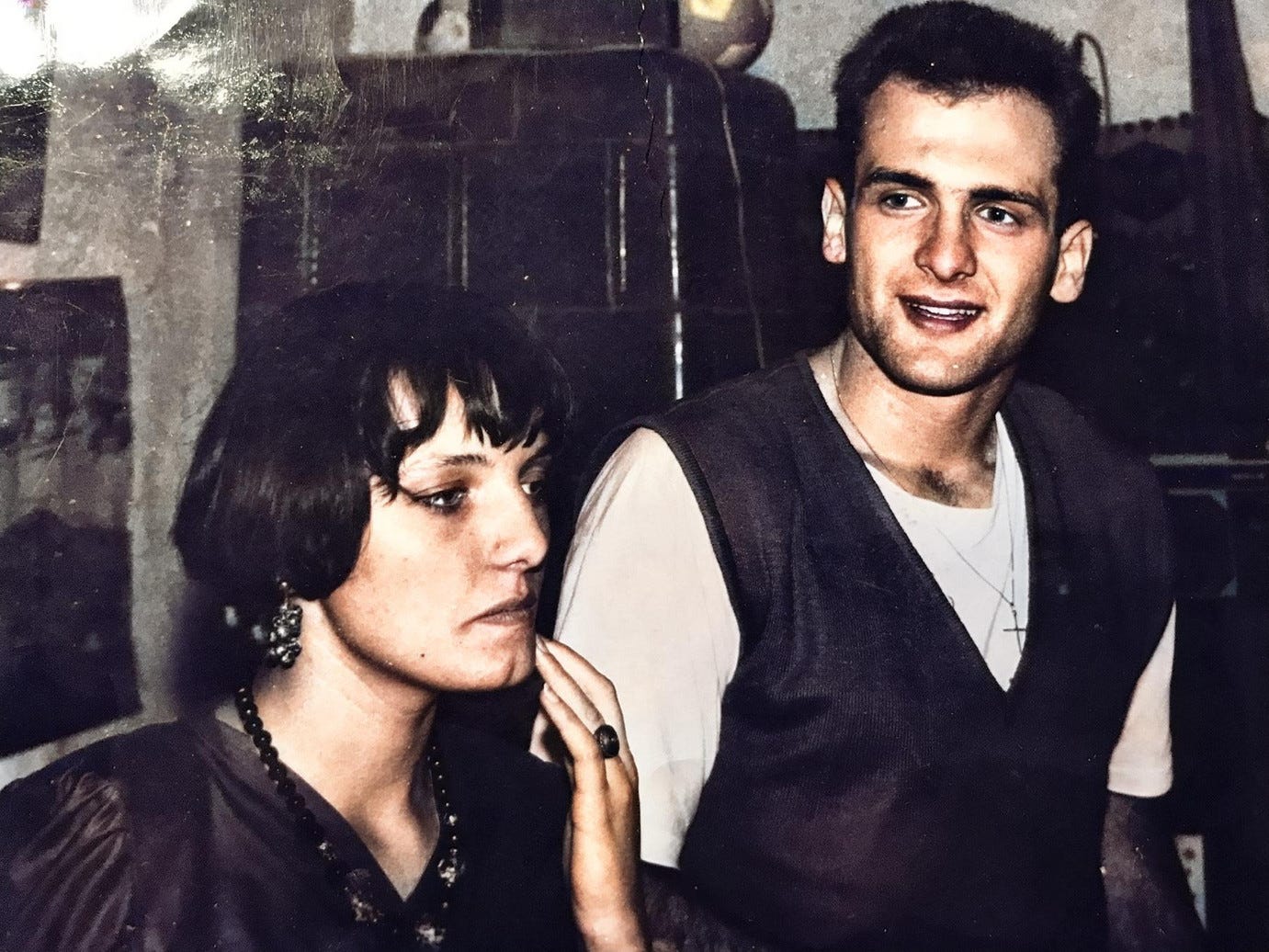
ONE JOURNALIST, FOUR IMPERIAL EDGES.
But there’s one more perspective on his legacy I started recognising only later: Georgiy Gongadze is also a fallen anti-colonial hero in a multi-generational line of so many Ukrainians who sacrificed everything for our freedom and democracy.
In 1987 he enrolled at the Tbilisi State Institute of Foreign Languages and was conscripted that same year into the Soviet army and sent to Afghanistan. He watched an illegal colonial invasion collapse from inside, wearing the occupier’s uniform, at eighteen.
When he came home in 1989, he walked straight into the next colonial crime: the Kremlin drowning in blood anti-colonial protests in Tbilisi with shovels and gas, killing twenty-one, most of them women.
Then Lviv in Ukraine in 1989, his mother’s hometown, where the third front found him. In his own words:
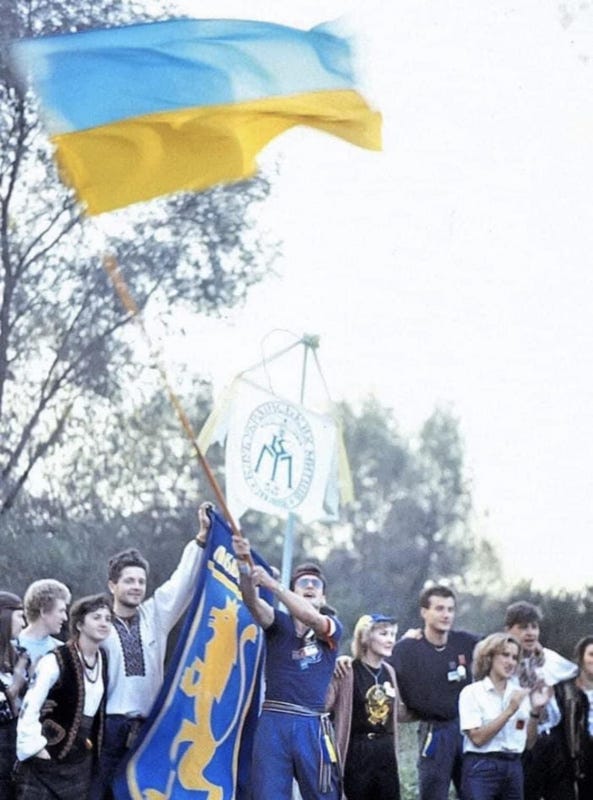
“One day, I received an invitation to attend the founding congress of the People’s Movement of Ukraine in Kyiv. There I met young Ukrainians whose spirit left a lasting impression on me. Soon afterwards, I travelled to Chernivtsi for the inaugural Chervona Ruta festival. It was there that an unexpected feeling arose within me: I realised, with startling clarity, that I could not live without this land.”
Gongadze chose a colonised identity and joined Ukraine’s fight for restoring independence. Waiving banned Ukrainian flags and singing banned Ukrainian national songs, getting harassed and attacked by the occupation authorities. His reporting on the collapse of russian colonial occupation in Ukraine shaped how we remember the heroes who ensured it happened.
Then the fourth edge came: Sakartvelo again. When moscow fueled and financed a civil war in his second home, Gongadze went back, kept reporting, and took up arms to defend the freedom that lets journalism exist at all.
All of it before he was 25.
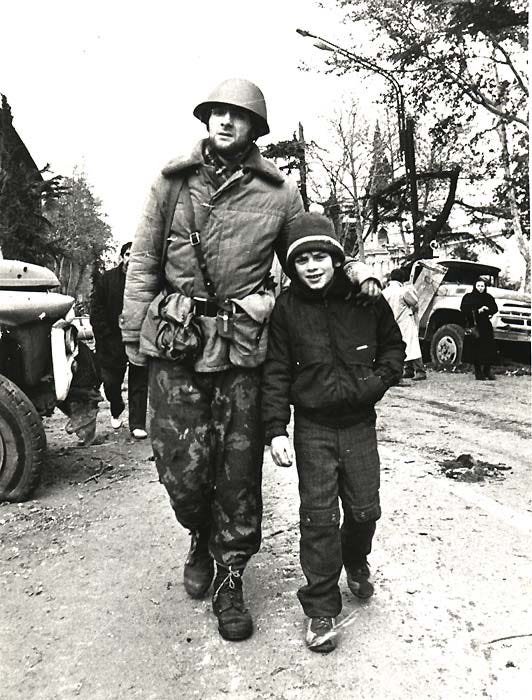
WHY GONGADZE LEGACY MATTERS TODAY. BEYOND UKRAINE, TOO.
In many ways, Gongadze’s investigative reporting in the 1990s also exposed the Kremlin's attempts to rebuild its grip on Ukraine by corrupting and blackmailing Ukrainian economic, political, and cultural elites—testing the playbook russia would later deploy elsewhere in the West, including in modern-day America. Not tanks. No shots fired. Shady bank accounts, kompromat, voter manipulation and cognitive influence campaigns.
“I want to live as a free person, with nothing to hide. I want to pay my taxes honestly. I want to stop being exploited. I want to be treated with dignity.”
Georgiy Gongadze
Today another generation of Ukrainian journalists report on and fight the same russian colonial crimes and tactics that Gongadze resisted. His legacy keeps inspiring them, too.
Thousands of my Ukrainian colleagues serve in Ukraine’s Armed Forces and defend their freedom of speech with arms. Like Gongadze did. At least 126 of them have been killed by russians while on this duty. An image of a journalist fighting imperialism and defending their right to report with a gun or drone still reads as shocking to democracies outside Ukraine. Yet, it a worrying reminder how many of us still take peace and our freedoms for granted, thinking that their defence is someone else’s job.
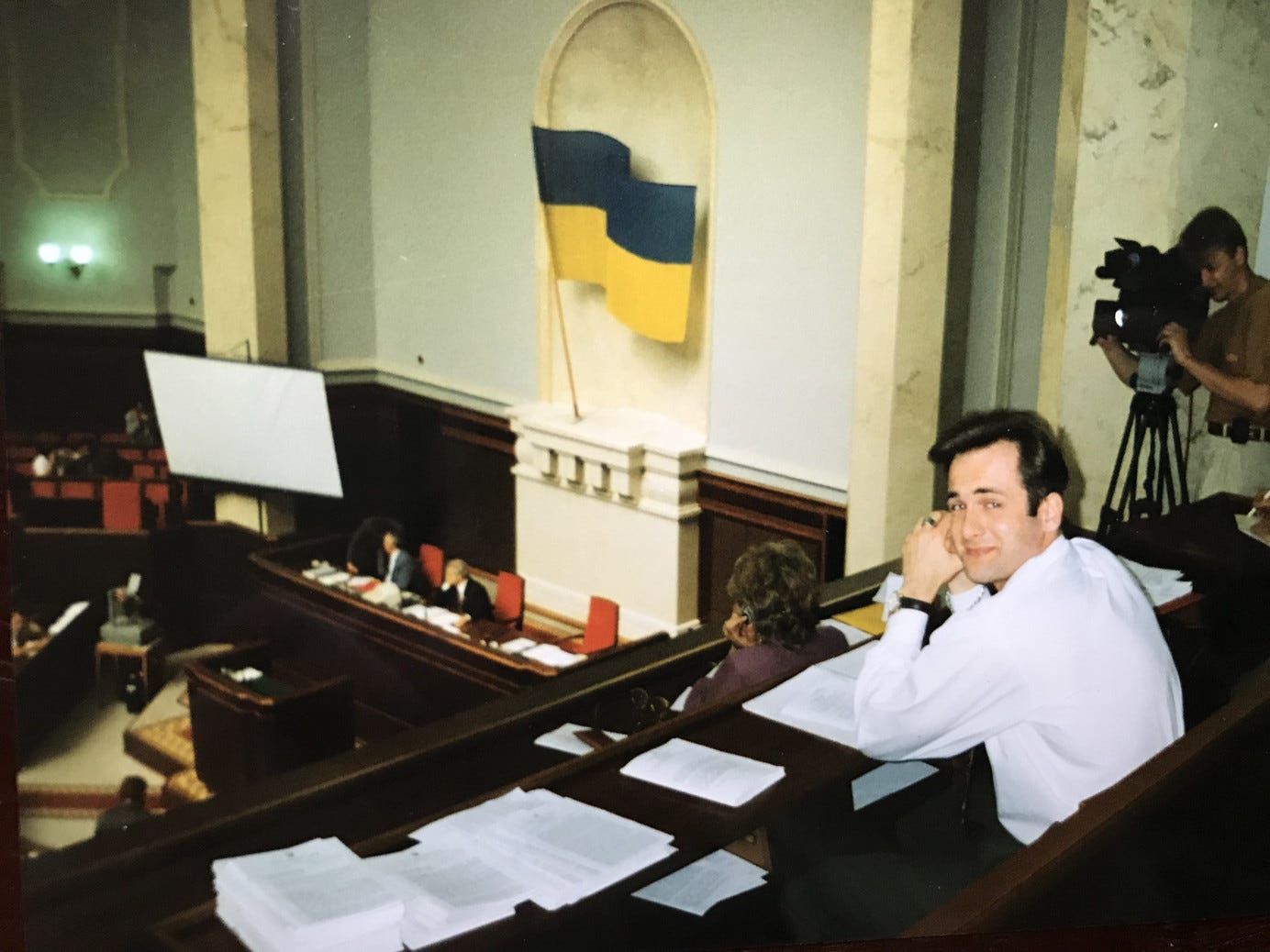
“Corruption has existed in every society, under every form of government. [...] Yet it is our duty to do everything in our power to confine it within the narrowest possible limits.”
Georgiy Gongadze
Thousands more of Ukrainian journalists are carrying on Gongadze's legacy by risking their lives daily and keep documenting the worst evil Europe has seen since the Holocaust. russians killed at least 8 Ukrainian journalists for doing their job and committed 971 documented crimes against Ukrainian media since 2022. Yet international aid for Ukrainian journalists has nearly dried up, exposing a harrowing lack of realisation of how crucial the Ukrainian frontline reporting and the work of Ukrainian journalists have been to European defences.
Whether kinetic or cognitive, the majority of attacks and tactics that russia is using against the West today have been tested on Ukraine first. Gongadze documented it, too: if you dig deeper into his work from 25 years ago, it is shockingly prophetic.
So when someone tells me that Ukrainian frontline reporting is a humanitarian charity case, I push back by reminding them that it is actually the oldest continuous field research on the resurging imperialism and how it can overwhelm any democracy. My problem is that some have benefited from these findings for free, and most haven't read them at all.
The Georgiy Gongadze Prize exists to keep those findings in circulation.
Thank you, Georgiy, for inspiring generations of people like me to never give up on freedom and democracy. To never give up on Ukraine.
“Sooner or later, our time in this world will come to an end. [...] In the end, little more than a name carved in stone will remain. But our children and those who come after us will still be here. They will walk among our graves, pause before our headstones, and ask themselves: ‘Were those who came before us the people they professed to be? Did they do all they could so that we might live in happiness?’”
Georgiy Gongadze
MUST-WATCH:
The Murder of Gongadze: 20 Years of Searching for the Truth. A documentary by Ukrainian investigative journalists on how Gongadze’s work and his murder became a turning point in the struggle of Ukrainian society for its democracy.
The Shadows of War. Gongadze’s war documentary about the russian imperial invasion of Sakartvelo-Georgia in 1993 (use auto-translated subtitles)
MUST-READS:
Georgiy Gongadze memorial page, documenting his life and work through memories of his family members, friends and colleagues.
Defend and Remember the Storytellers. A 2024 essay by Gongadze’s daughter, a Ukrainian journalist, Nana Gongadze.
The last morning. In memory of Georgiy Gongadze. A 2023 essay by Gongadze’s spouse and a Ukrainian-American journalist, Myroslava Gongadze.
The truth is hard to accept. In memory of Georgiy Gongadze. A 2023 essay by Sevgil Musaeva, editor-in-chief of Ukraïnska Pravda.
Gongadze’s quotes come from a Ukraïnska Pravda profile, done in collaboration with his family and The Georgiy Gongadze Prize.
MUST-FOLLOW: Ukrainian frontline newsrooms reporting in English:
Vgoru, a frontline newsroom from Kherson
Russian Colonialism 101 is the first newsletter to shed light on Russian colonialism and is part of the Volya Hub network. What is happening to Ukraine has happened many times before, and the rest of the world has been conditioned to overlook or misdiagnose it. This isn’t history. It’s how you stop being shocked by what was always predictable.
“I am a big fan of your work and find it accessible for seeing the larger picture that people seem to be misunderstanding—without this digestible explanation of the history—to appreciate empire strategy and mindset at play currently.”
by Jessica Bee, a paying supporter of Russian Colonialism 101.