here is what's in store for you this week:
(estimated reading time: 7 min)
This week’s story:
A Kyiv florist now runs a women-led drone factory. Europe's legacy arms makers refuse to take her seriously — and she stands in a long line of women empires never seen coming, from Kateryna Zaretska of Ukraine to Queen Nzinga of Angola.
And in this week’s reading list:
The couriers, nurses, organisers and armed fighters who built Ukraine's anti-colonial underground from the 1930s to the 1960s.
In 1916, Central Asia rose up in the largest anti-colonial uprising the russian empire ever faced. Most of the world has never heard of it. That is not an accident.
From the bachi of Turkestan to the "effeminate Bengali," empires built their authority by deciding which men counted as men, and Soviet homophobia ran the same script as British colonial masculinity.
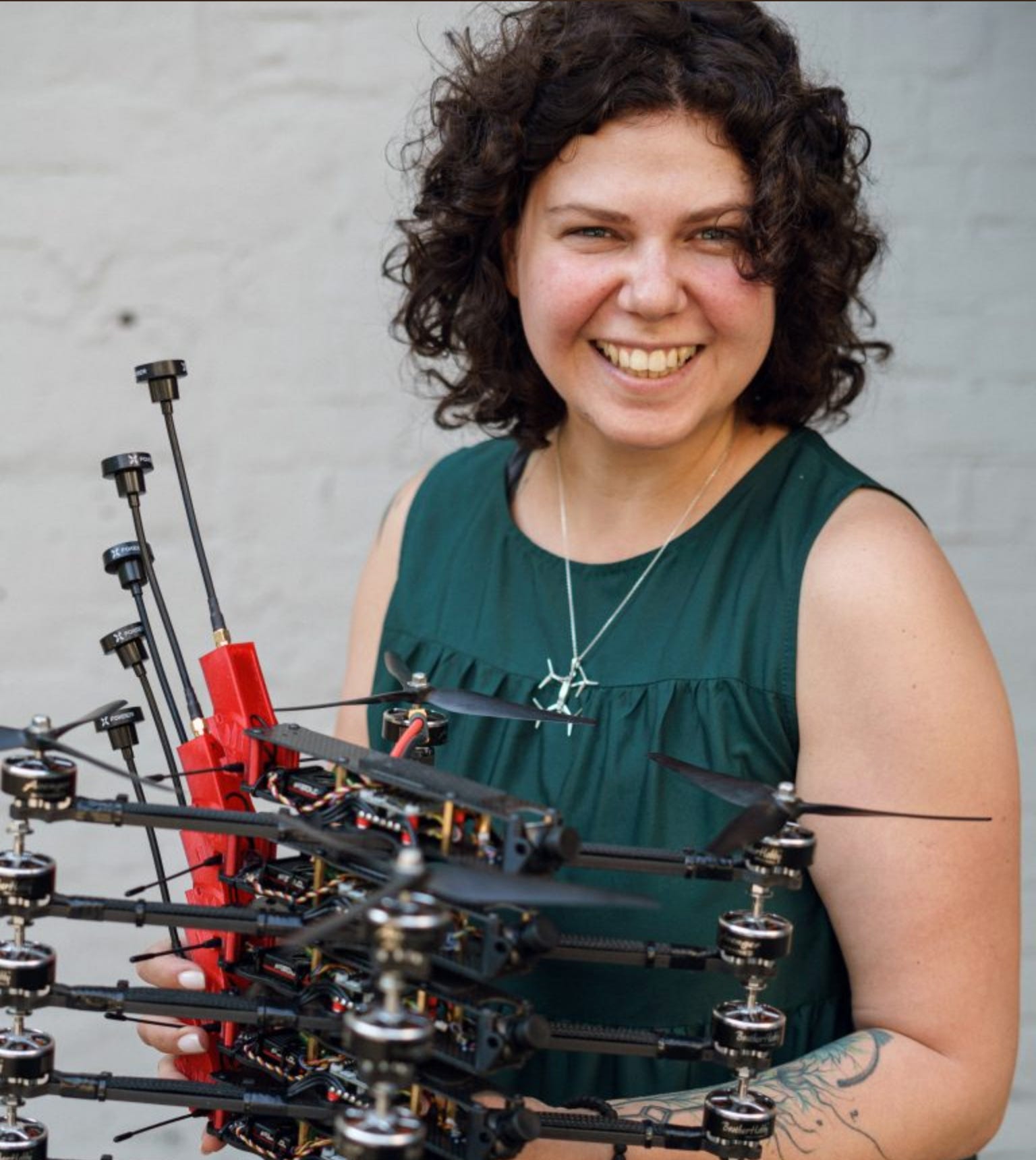
If russia did not exist, Kseniia Kalmus would keep living her dream life as an award-winning florist. Before 2022, she had a thriving floral studio in Kyiv. Today, she uses the same premises for a small drone assembly line. It started as a non-profit workshop to help friends and family fighting on the frontline, and now shipped over a thousand flying robots to fight imperial russia. Women-founded, women-led, women-engineered: Klyn Drones is a donations-powered factory that trains hundreds of volunteers to assemble affordable drones using 100% Ukrainian components (you can power them up: klyn.io/donations).
"What people who aren't in Ukraine don't understand," Kalmus told a foreign journalist recently, "is that if Ukraine falls, they are next. If they support Ukraine, there will be a life for them too."
A news report by an American journalist, Jackie Koppell.
Over three years, Ukrainian anti-colonial resistance maximised such decentralised, citizen-powered networks to launch a defence revolution and rewrite the economics of modern war. These days, a drone worth several hundred euros can disable a tank worth millions. That math, run thousands of times, is what recently let Ukraine claw back the initiative against a far larger imperial army. No army in the rest of the democratic world is capable or ready to fight at the Ukrainian speed.
When Armin Papperger, chief of Rheinmetall — Europe's fourth-largest arms maker — was asked about it, he dismissed the people behind it as "housewives" with 3D printers in their kitchens, "playing with Lego." That misogynistic snap was not accidental. It was panic.
Count the legacy Western arms makers founded by women. Count the ones with women-led engineering teams. The number sits near zero — the same companies that spent a decade failing to see the warfare revolution coming now defending the relevance of their legacy products. These facts are connected.
After studying dozens of imperial invasions, I can say it plainly: decentralised structures are the only ones that have ever beaten imperial advances. Whereas, most of the legacy arms makers in the West trace their origins to Western imperialism — mimicking rigid, top-down imperial decision-making even today. Merit-based systems open the doors to asymmetric innovation; hierarchies keep them shut.
Ukraine’s defence isn’t a gender‑equality utopia, and men still make up most of it. But far more women innovate, build, and fight here than in most democracies. Not because of a special diversity program — but because Ukraine runs a resistance system where the person closest to the problem gets to solve it, and whoever builds what works wins the contract. Kseniia isn’t an exception. She’s the rule that made Ukraine a global leader in wartime innovation.
"Inside the occupied territories, women form the backbone of the resistance. Many hold positions in Russia’s civil administration—at clinics, schools, and government offices—and report to Ukrainian intelligence. They exploit the occupiers’ assumptions: Russian soldiers often fail to imagine that women can be combatants. Few suspect that a grandmother passing their barracks every morning, shopping bags in hand, is the first link in a kill chain.”
This rule is also not new.
Russian Colonialism 101 is the first newsletter to shed light on Russian colonialism and is part of the Volya Hub network. What is happening to Ukraine has happened many times before, and the rest of the world has been conditioned to overlook or misdiagnose it. This isn’t history. It’s how you stop being shocked by what was always predictable.
“I want to support Ukraine in its historic fight for freedom and independence from Russian imperial domination.”
by William E Brennan, a paying supporter of Russian Colonialism 101.