Just recently, I got westplained (again) that I can't tell the stories of the colonised without offering the same space for 'good russians' to weigh in. I was told my message wouldn't be credible without their corroboration. I was told I won't be able to secure much Western backing for my projects if I don’t include ‘opposition’ russians. Unfortunately, this is not an isolated incident. Westerners force more and more Ukrainians into the same spaces with russians to 'hug it out,' and 'work it out,' and 'be civil.' But this is another manifestation of the colonial gaze.
Let me explain what I mean.
Many 'good russians' exploit this opening to hijack Ukraine conversations and, once again, reproduce their colonial narratives. It happens almost instinctively, and most cannot even help it or self-reflect on how problematic it is. Think of a popular kid in your school who has never had to fight for attention and accepts being the centre of any conversation as a natural order.
When that happens, most ‘good russians’ sell the image of mythical 'great russia' and 'great russian culture' that exists in complete divorce from the centuries-old practice of conquering, exterminating, and looting neighbouring lands. They equalise their dissident, which involves, on average, minor fines or hypothetical jail terms or (lack of a Starbucks or IKEA nearby,) with the ruin of mass extermination that Ukrainians face. Or they appropriate Ukrainian identities and then misrepresent Ukraine — just to avoid responsibility for another genocide.
And for all of that, 'good russians' get celebrated and praised and amplified by the Western establishment. While Ukrainians who protest it are called emotional, irrational, and hysterical.
Why? This phenomenon is a good illustration of the deeply rooted colonial and orientalist perceptions of Ukrainians and Eastern Europeans in the West. When white russians find Western empathy and solidarity on standby, Ukrainians are endlessly forced to pass a test of being worthy of it — even amid genocide.
So how does Russian imperial ‘self-victimising’ work in practice, and why is it so dangerous to platform it abroad uncritically? Check my essay below.
here is what’s in store for you this week:
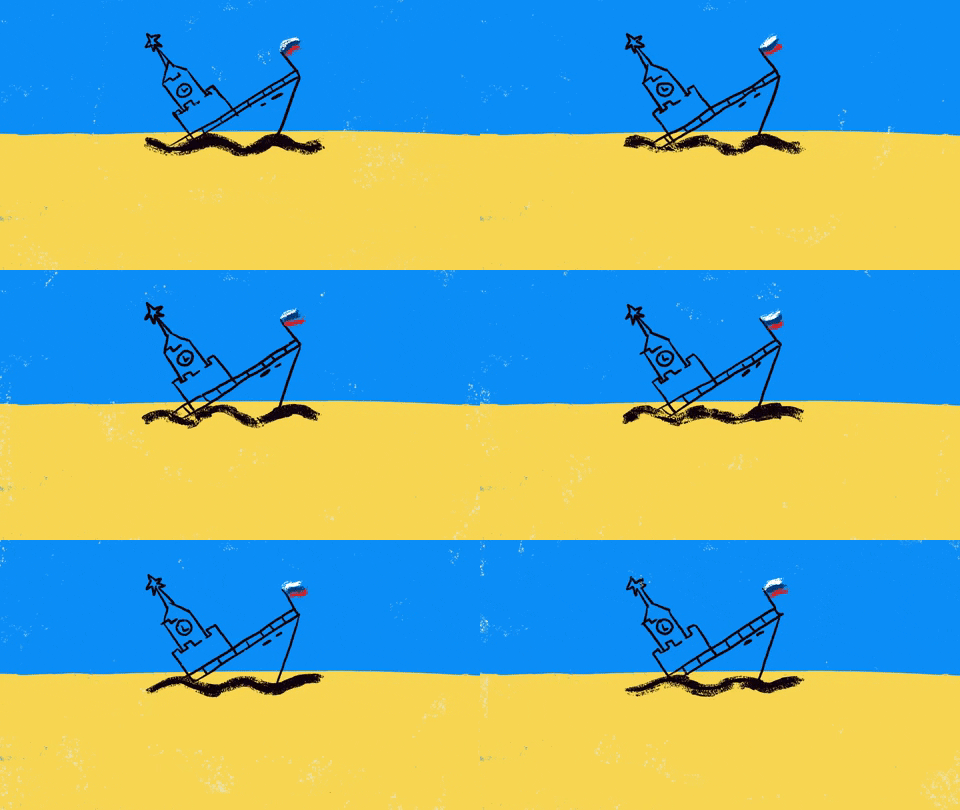
The phenomenon of foreigners forcing Ukrainians to share the space with russians and hug the genocide away: explained and illustrated;
How do we end up with colonial gaze coverage of Ukraine in Western media?
Plus, happy Pride Month for queer Ukrainians defending Europe from russian imperialism.
COLONIALISM BEHIND THE “GOOD RUSSIANS” PHENOMENA
You can reproduce colonial stereotypes without even realising it. That's why colonialism is still a thing in the 21st century. That’s why I know for a fact that some of those Westerners shoving Ukrainians into the same spaces with Russians mean well. But that's why it is also essential to realise why this practice is wrong and how exactly it reproduces the same culture that led to the ongoing genocide in Ukraine. I'll recruit several pieces of great analysis from fellow Ukrainians (and one fellow European) to illustrate that.
Russian Colonialism 101 is the first newsletter to shed light on Russian colonialism and is part of the Volya Hub network.