here is what's in store for you this week:
(estimated reading time: 6 min)
A coded farewell letter from the parents to the daughter they gave away to save her from russian ‘re-education’ — written in a Ukrainian forest in 1950, decoded only seven decades later;
The Eastern European resistance russia insists never happened — Polish Cursed Soldiers, Baltic Forest Brothers, Romanian Haiducs, Bulgarian Goryani, with their true stories now finally available without an imperial propaganda filter;
The women behind the Baltic anti-colonial resistance of the 1940s and 1950s;
The Ukrainian instinct to build its own resistance tools, faster than the empire can crack them, did not start in 2022.
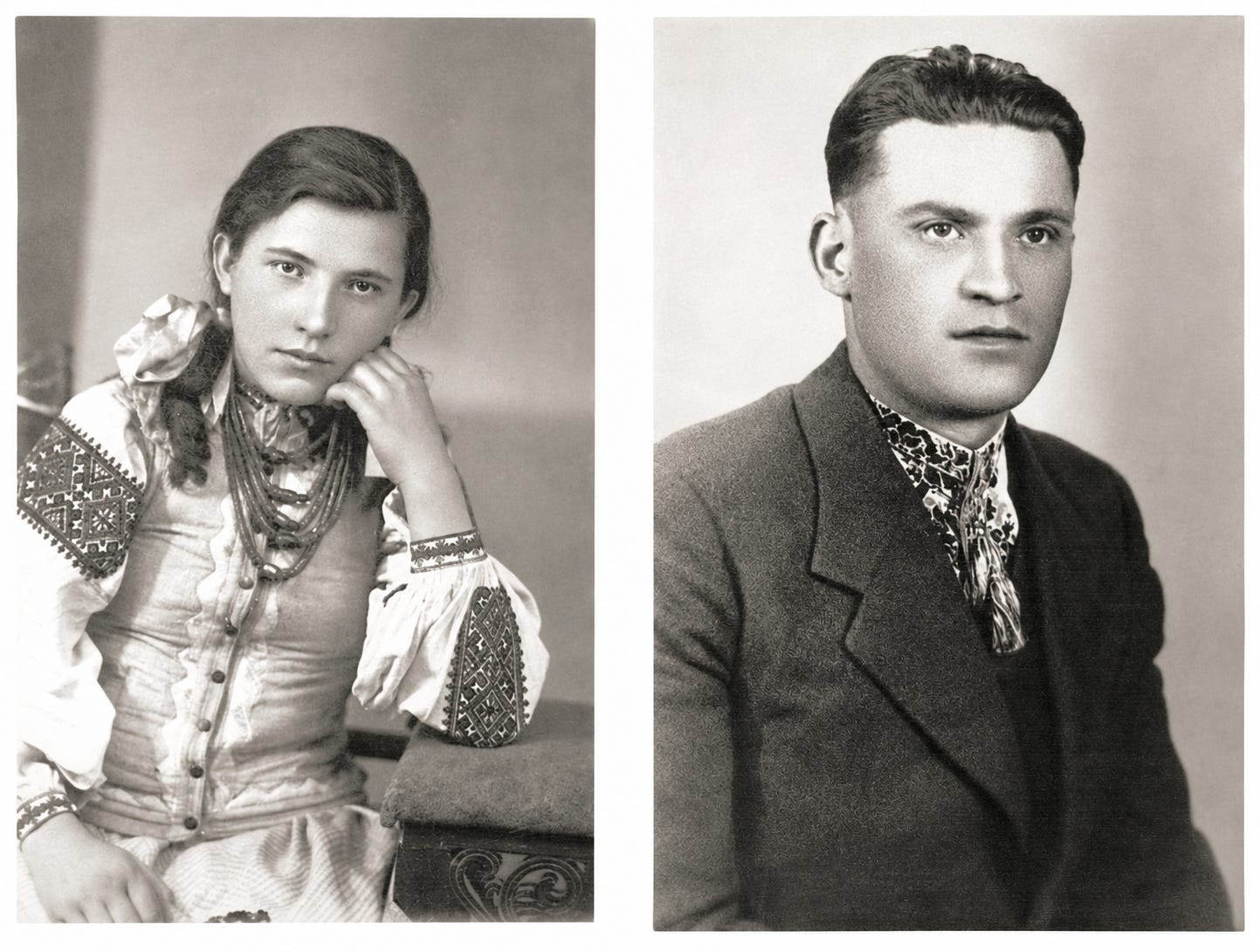
In the summer of 1950, deep in a Carpathian forest, two Ukrainian Insurgent Army fighters got married. Five years after World War II was officially over for the rest of the world. But forty years before it will be over for Eastern Europe, with the fall of russian occupation in 1989-1993.
Hryhoriy Vatseba — codename “Sulyma” — and Mariya Babinchuk — “Kalyna” — had a daughter that August. On her fourth day, Hryhoriy carried her at night to another village and left her with strangers, to keep her alive. Then he and Mariya hid in an attic and wrote farewell letters to a daughter they knew they would never see grow up. Because the alternative was watching her be taken to a russian orphanage for ‘re-education.’ They sealed the letters in a bottle along with an encrypted marriage certificate written in a cypher that Ukrainian intelligence services would need 70 years to break. The Ukrainian instinct to build its own resistance tools, faster than the empire can crack them, did not start in 2022.
“My dear child Motrya,” Hryhoriy began. “When you read this letter, perhaps I will no longer be in this world — but You will understand the circumstances we find ourselves in today. Know this: you came into the world at the time of the most brutal struggle of the Ukrainian people against northern Moscow… We are making superhuman efforts to preserve our existence and continue the fight… The forest is our father and the night our mother, yet even they cannot guarantee full safety, and we must hide underground… You came into the world free, not a slave! I place a father’s kiss upon your forehead and give you my blessing. May the Almighty keep you in His care and allow you to live in the freedom we long for.”
russian occupation authorities killed both parents in July 1951 in an ambush. Their daughter Hanna grew up not knowing who they were until she turned sixteen.
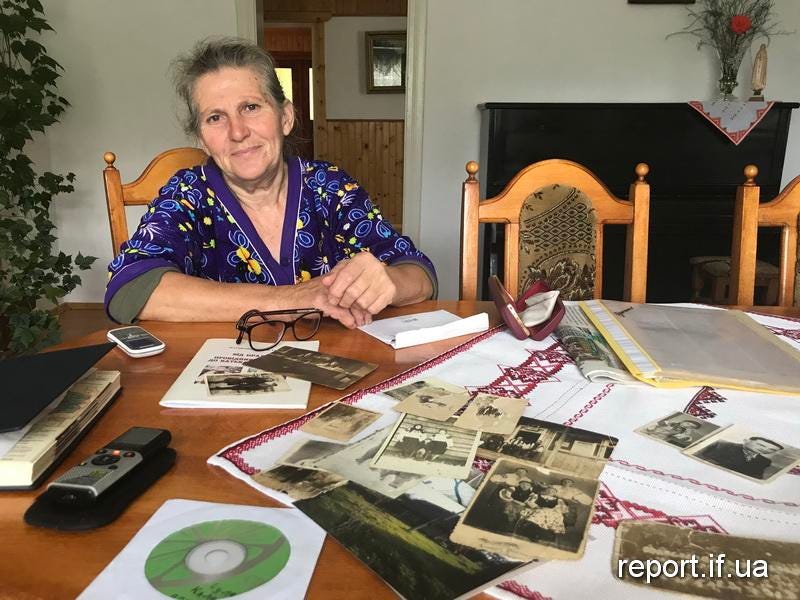
The sacrifice of Hryhoriy and Maryia was not for nothing. The Ukrainian resistance to the Soviet occupation mobilised up to 200,000 people and lasted until 1960. It wasn't a professional army. It was a society that refused to submit to imperialism. Even after being officially crushed, the movement paved the way for the restoration of Ukrainian independence and continues to inspire Ukrainian anti-imperial resistance today. Hryhoriy’s and Maryia’s daughter lived to see a free and independent Ukraine. As of 2022, Hanna was still living in Western Ukraine. You can read her story here, auto-translated.
This is one of millions of Ukrainian stories the Kremlin spent eighty years erasing — and it is not a Ukrainian story alone.
Russian Colonialism 101 is the first newsletter to shed light on Russian colonialism and is part of the Volya Hub network. What is happening to Ukraine has happened many times before, and the rest of the world has been conditioned to overlook or misdiagnose it. This isn’t history. It’s how you stop being shocked by what was always predictable.
“Because I believe we need to clearly name and call out colonial power structures when we see them. As you mentioned, the right language matters because it shapes our understanding of the world. I want to dig deep into the history of russian colonialism.”
by Livia Huber, a paying supporter of Russian Colonialism 101.