

here is what's in store for you this week:
(estimated reading time: 17 min)
What do you tell someone who blames this war on one man in the Kremlin?
How do you answer “Crimea has always been russian”?
Why look into the darkness of this war when looking away is so much easier?
Why would anyone give up russian, the language they grew up with?
How do people of so many ethnic backgrounds find a home in Ukrainian identity?
Plus: Aziza Eskender, a Crimean Tatar artist on the long line of Ashiq and Kobzae singer-philosophers, on masks, Sufi dervishes, the Kharkiv avant-garde and why she is sure the empire will fall. And for paid subscribers, a reading list on a century of Ukrainian–Crimean Tatar anti-colonial solidarity.
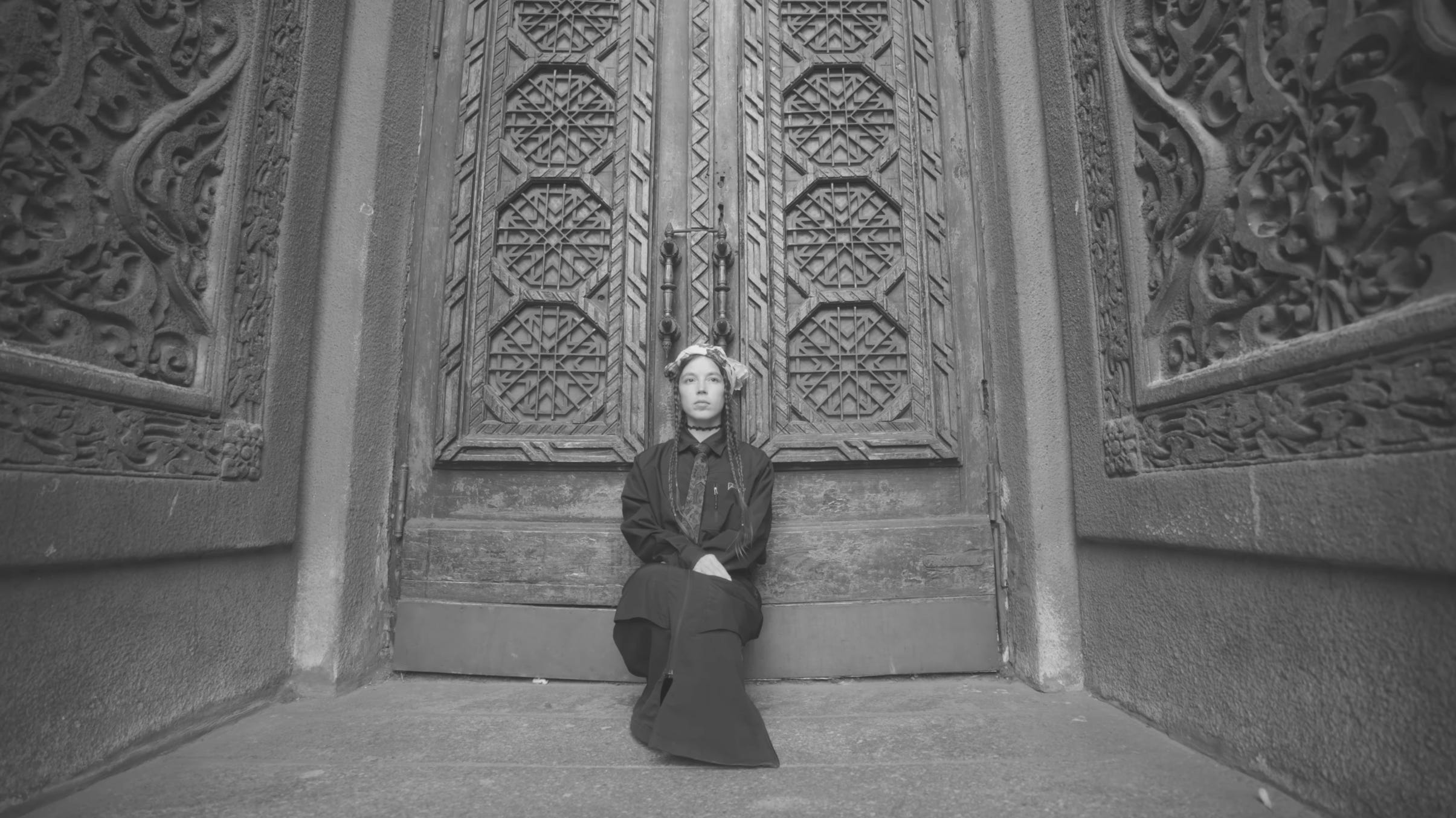
It's a platitude that the best art is honed from the place of pain. Yet you won’t fully grasp it until you see Aziza Eskender perform. I have been mesmerised by the art of this Crimean Tatar artist since I stumbled upon some clips online several years ago. It was the first time I saw anyone dealing with the legacy of russian colonialism through art. Explicitly and unapologetically. But it didn’t prepare me for seeing her performing in person.
When Aziza’s voice hits its finest notes, you're awash in reverberations like an emotional tsunami. Goosebumps, and all. So much force and power emanating from a petite human being—I marvel every time.
After initial obsession with her music came fascination with her paintings. Then turns out she has an incredible life story, too: born in exile to a Crimean Tatar family in Central Asia, raised in Crimea-Qırım after Ukraine restored its independence and then found herself in another exile in Odesa after russia stole her home once again.
Turns out she is also a descendant in a long line of Crimean Tatar travelling singers-philosophers. And wait until she mentions mystic Sufi traditions in one breath with the legacy of the Ukrainian avant-garde theatre.
I have never met anyone like Aziza Eskender. I wanted to share this gift with you.
After we performed together in Prague, we sat down to chat about her art, her resistance, and why she is sure the empire will fall.
The interview will be open to everyone for free, and the reading list stays behind the paywall. If you like this conversation, please stop by a fundraiser to empower Ukrainian heroes from the 3rd airborne assault battalion "Phoenix" of the 79th Air Assault Brigade with new frontline trucks. If you donate, you get a chance to get a signed copy of Russian Colonialism 101, among other cool things. Manufacturing imperial regret, with your help.
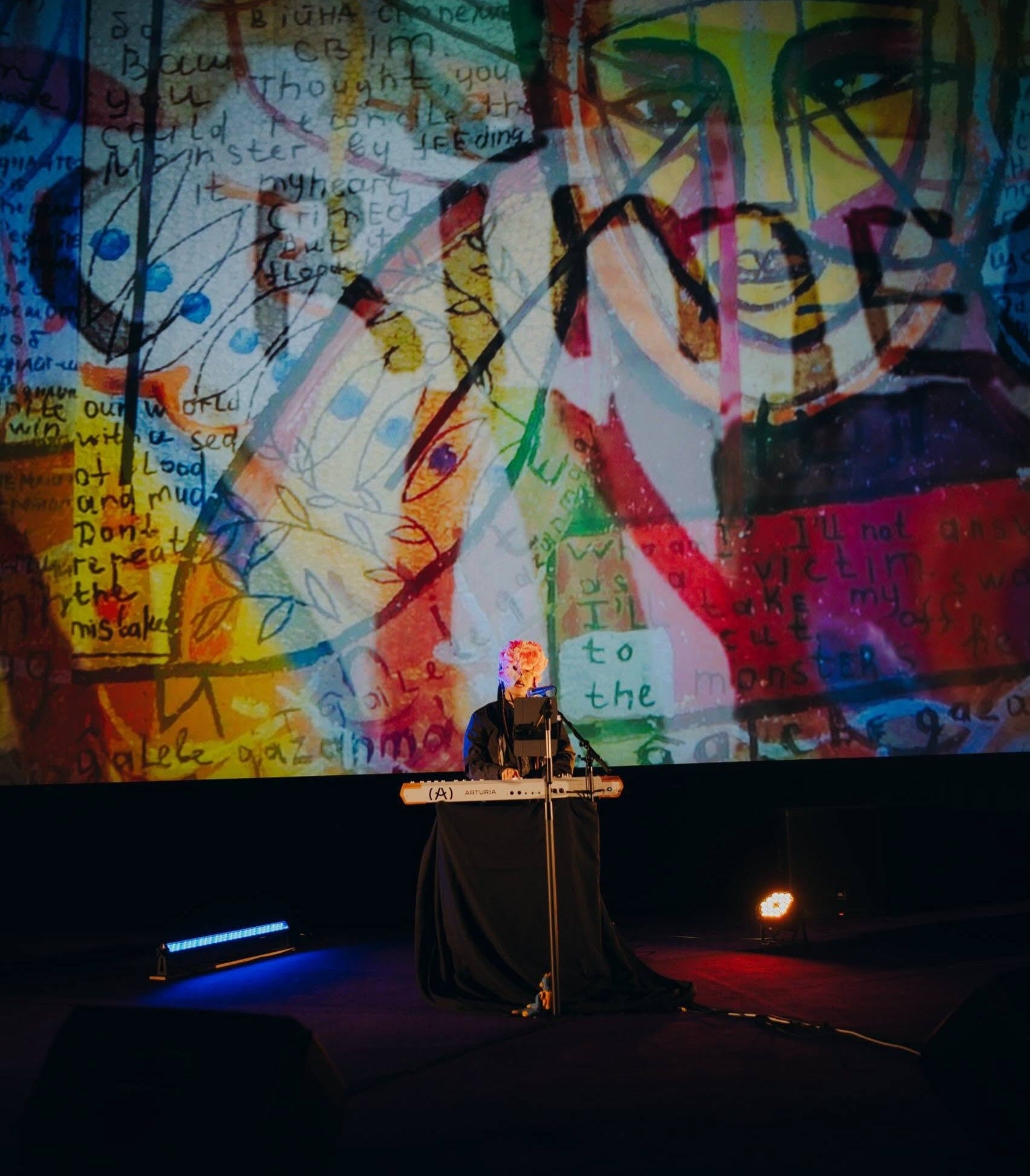
MAKSYM: You’ve just returned to Ukraine after a European tour, including opening the Ukrainian Film Festival in Berlin with a powerful multimedia performance that combined music, singing, and your artwork projected onto a giant screen. As you perform abroad more often, what’s the biggest difference between performing for international audiences and Ukrainian ones?
AZIZA: I was so happy to come back to Ukraine. I really am happy to live in reality here. The illusion of peace is very strong elsewhere in Europe. The Ukrainian Film Festival, which I opened, started with a screening of a Ukrainian documentary, The Illusion of a Quiet Night, by Olga Chernykh. For me, it was a perfect mirror of reality.
With my art, I try to open the real world for people. And yes, sometimes it’s very painful; it’s not light entertainment, not something funny. Not everyone wants to touch these very meaningful topics that ask us to change our own lives. To realise that a war can happen elsewhere in Europe, too. It’s much more comfortable to say, for example, that one person is guilty of what is happening in Ukraine. So before, I was sceptical about travelling abroad. With this trip, I really understood that we have to do it again and again. And even if the difference between Ukraine and the rest of Europe is so big, we need to keep building new bridges between us—as a replacement for those russia built for us over many centuries.
“The colony is laughing at me once again. Again and again, it stifles my voice with its operatic soprano of utter humiliation, resigned to the reality of those mad pacifists who try to speak to, listen to and understand a rapist and a serial killer. To touch his soul and describe, in lofty style, why this is what it means to be human, to shake his hand, stained with the blood of millions of victims.”
An excerpt from the monologue Aziza Eskender delivered during her performance in Prague on 12.10.2026.
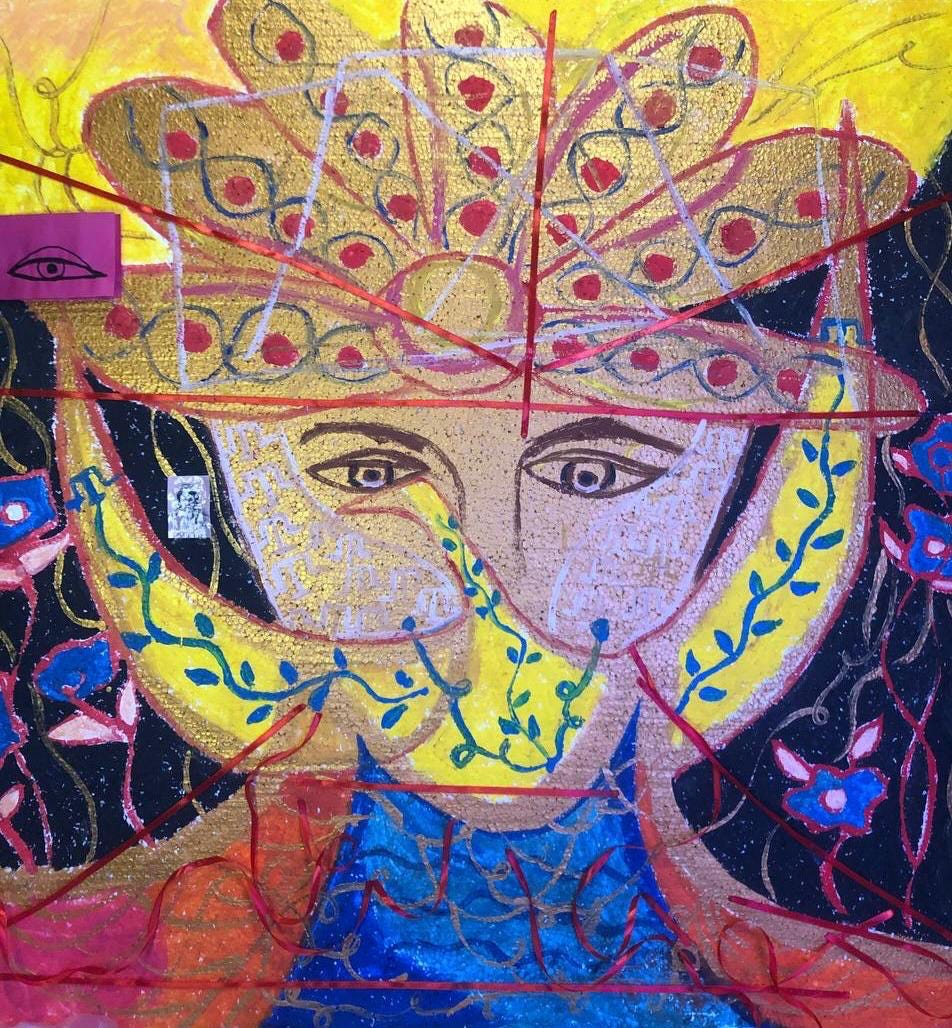
MAKSYM: For those, for example, who aren't familiar with your art: you combine so many mediums at once. You sing, you write, you compose, you dance, you paint, you act. Do you maybe remember the first time you turned to the arts to tell the stories you wanted to tell? How early did you start branching out into these various mediums?
AZIZA: My mom loved paintings and poetry, my father loved music, and they both taught me to respect art. Not everybody respects artists; they can be crazy (laughs). Because you always try to feel the future and show it to the rest. Not all respond to that well. We couldn’t afford art school, but my parents made space for the art at home. My mom would say, “You can clean the house, or you can paint!” My sister and I always chose painting, while she cleaned everything herself (laughs).
My sister loved classical realism; I was drawn to Matisse and Klimt. I knew nothing about Crimean Tatar painters, which now feels like an imperial lens: you start your artistic education through someone else’s culture instead of your own.
But I was fascinated by the dance and geometry of colour, by their emotional power. I copied famous masterpieces, joined the school theatre, and it changed my world. That’s when I decided to become an actress. I chose a university of art in Kharkiv and began studying theatre of animation: how you can animate space, body, masks.
“The colony has countless faces; it is a many-headed monster that assures free European intellectuals that they are different. They are good colonisers; they differ from the bad ones in their noble bearing, their profound knowledge of world culture and history, and their ease in savouring sweet wine at grand exhibitions of human vanity.”
An excerpt from the monologue Aziza Eskender delivered during her performance in Prague on 12.10.2026.
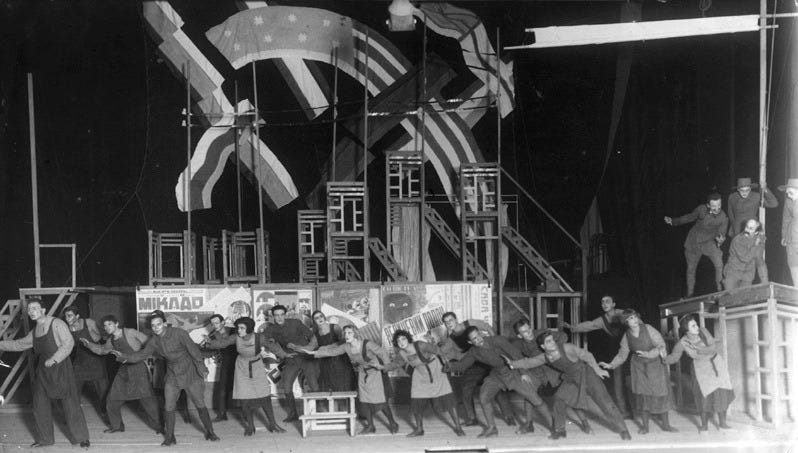
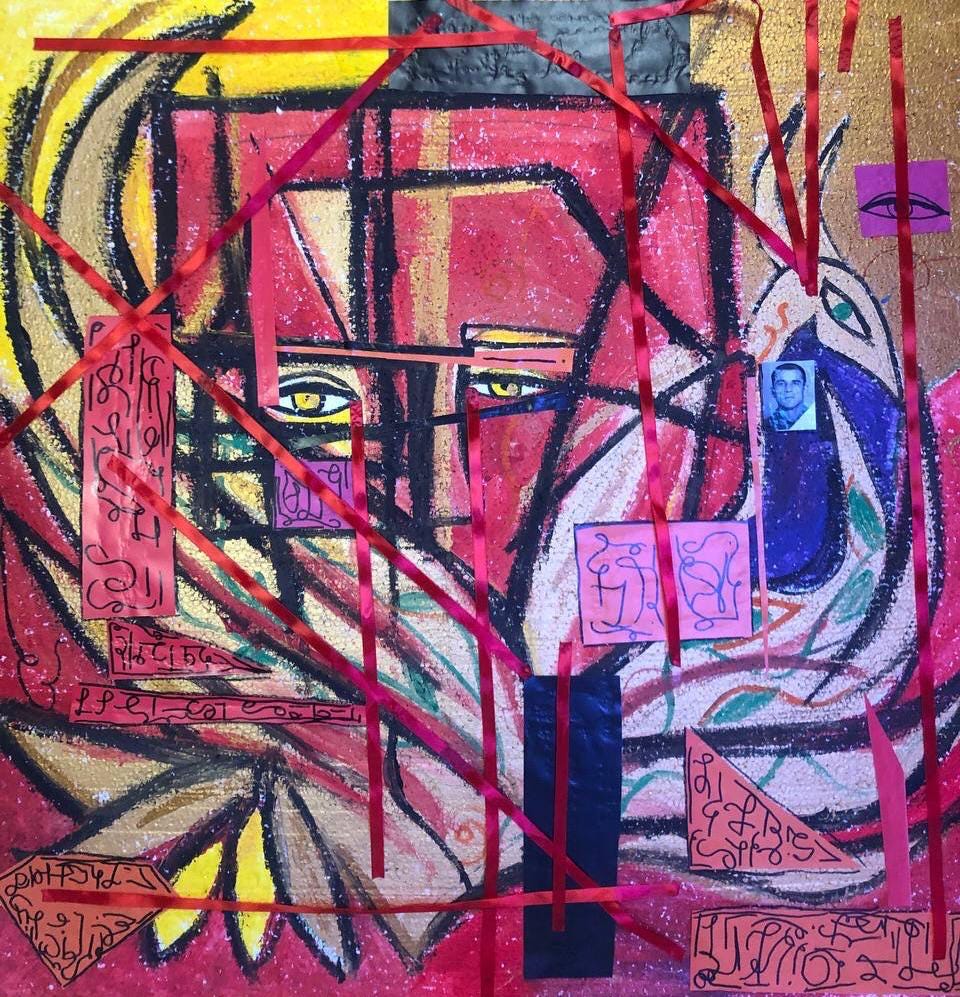
MAKSYM: I am glad you mentioned your paintings. They’re remarkably intense and fearless in their use of colour. I see echoes of both Ukrainian and Crimean Tatar folk traditions, especially in the rich ornamentation. But I’m particularly curious about the Kharkiv influence. For those unfamiliar with its history, Kharkiv was a major centre of Ukrainian modernism and the avant-garde a century ago. Your paintings also incorporate words and phrases. On one hand, this recalls the Crimean Tatar tradition of ornamental calligraphy. On the other, it resonates with the Ukrainian avant-garde’s desire to anchor visual art in ideas, stories, and messages. While studying in Kharkiv, did you feel the influence of the Executed Renaissance and the avant-garde tradition? Did figures such as Anatol Petrytsky, Vadym Meller, Les Kurbas and the Berezil Theatre shape your artistic vision?
AZIZA: One hundred per cent. This legacy envelops you in Kharkiv. Even in the architecture, local art, and the people and meanings they carry. At the time, though, it mostly affected me subconsciously. From the inner flame, you know? For example, when I was studying in Kharkiv, I saw The Colour of Pomegranates by Serhij Parajanov, and it made a profound impact on me. But I did not know the extent of oppression that these artists of the past went through.
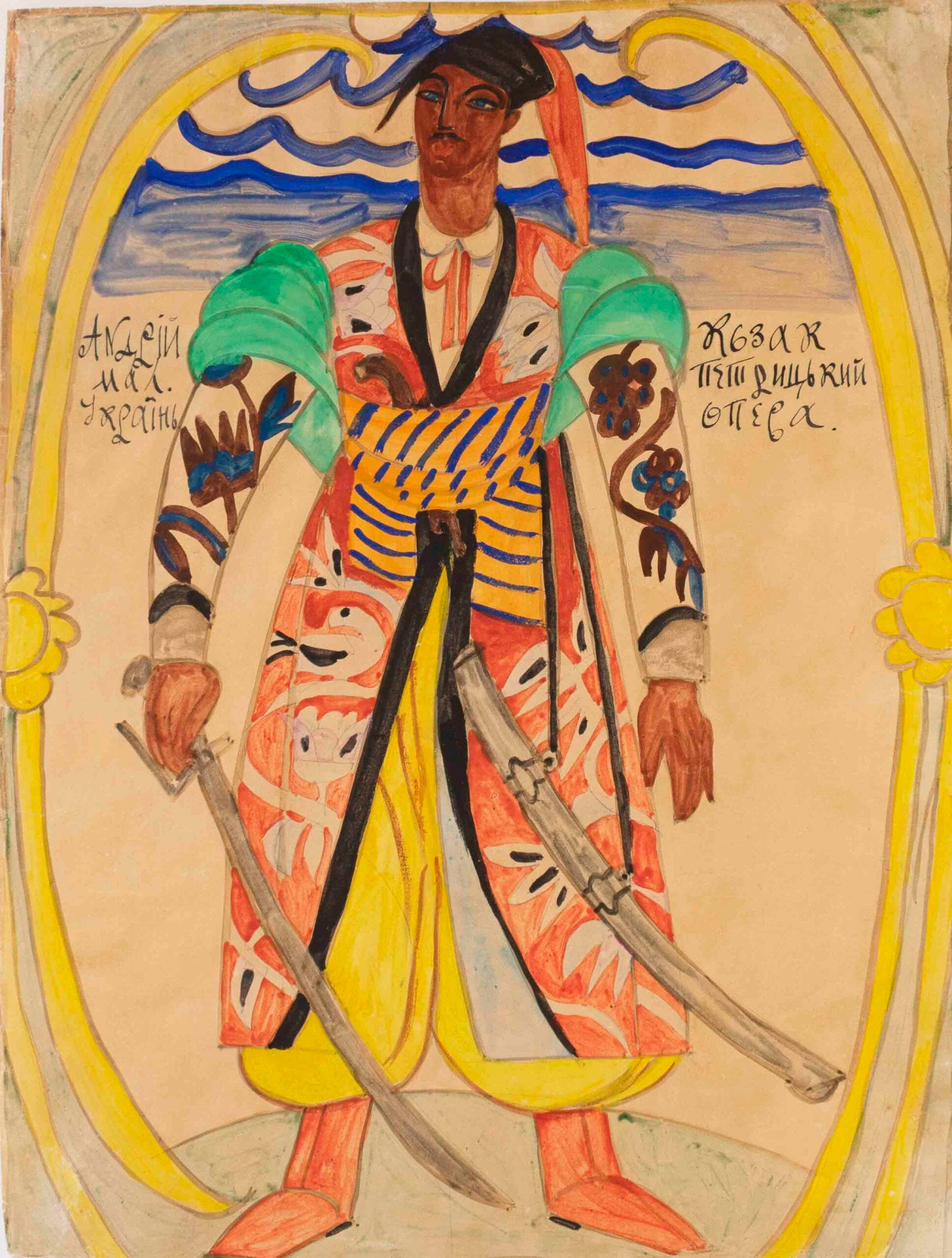
At the time, I was still a very colonised person, too. Of course, some Crimean Tatar and Ukrainian music also had an impact on me. But only later, when I started digging into my culture's archives, did I begin to see the music in colours, geometry, and space. Suddenly, music was around me and in dance too. Movement also had colour and notes.
“For 32 years this octopus drank my blood, squeezed out my heart and stifled my will; 32 years of my short life and a century for my people – a dark era of ‘soft power’ colonisation that almost destroyed our language and erased our names from the world’s heritage. As far as the monster is concerned, it would have been better if we’d never existed at all. It would have been better if we’d all died through deportations, drownings and executions.”
An excerpt from the monologue Aziza Eskender delivers during her “Colony” performance.
MAKSYM: I’ve heard the same thing from a lot of Ukrainian and Crimean Tatar artists. This almost mystical-like experience of creative awakening once you start reconnecting with your roots. Because so much has been erased, we grew up without knowing our ancient traditions or what makes us unique. But it still manifests in our creations, even before we learn the names of the erased artists who came before us. That’s wild!
Let’s talk in more detail about some of your performative art. For example, if someone discovers you through social media, one of the most common images is you performing masked, filming yourself in front of recognisable sites in Ukraine and abroad. These masks are always elaborate, with very intense, beautifully done patterns. But why are you masked?
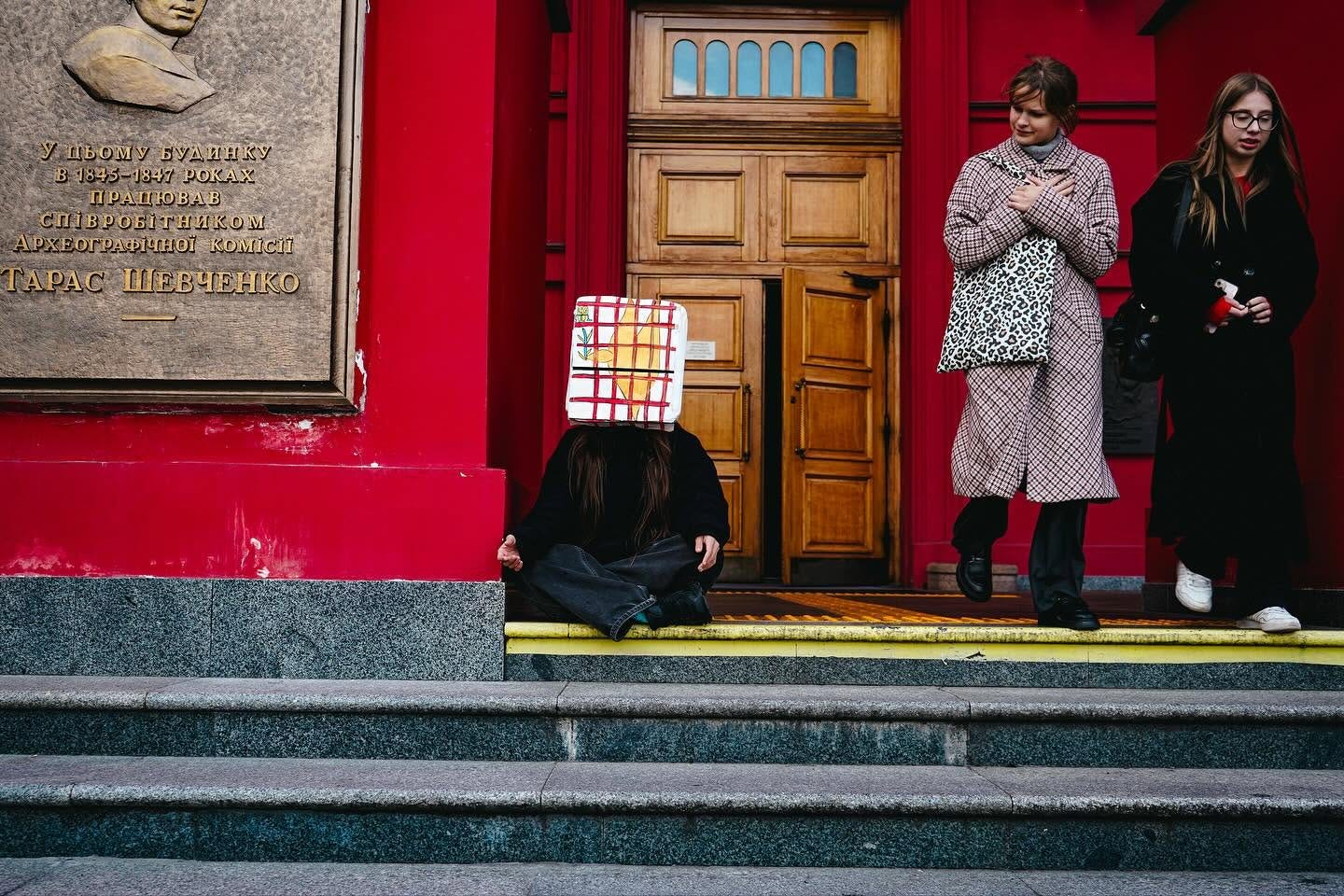
AZIZA: My masks symbolise both the inability of the outsiders to see my real face due to colonial erasure and my inability to see the outside world fully due to my ongoing pain and grief for my nation.
After the full-scale invasion began in 2022, in some sense, my former self died. I spoke russian, wrote songs in russian, and believed I could help inspire russians to change, to end the empire and let Crimea go without more bloodshed. Of course, it was very naive. This was like a monster holding my identity hostage. I was part of the russian culture. I played the game that russia designed for such people like me: born through deportation, genocide and assimilation. I had to let it all go.
Then I asked myself: what next? I could be killed by a missile, or I could do something meaningful. I was already fundraising for our troops, but I decided to speak out through art, too.
Why? Because russia fears our culture, too. For generations, russians have been killing and deporting our best writers, artists, and intellectuals. They would burn our books. All so their culture is louder.
To be killed mentally, for me, is worse than to be killed physically. I understood that if I stopped creating, they would win again. So I changed my language: in speaking, in singing. I also began learning Crimean Tatar.
MAKSYM: Because you were raised only speaking russian?
AZIZA: Yes, my grandparents spoke Crimean Tatar, but my parents already spoke russian to me. Because of assimilation.
MAKSYM: It is very similar for Ukrainians of my generation: our grandparents spoke Ukrainian, but our parents spoke Ukrainian only to their parents, and russian to us. And we were brought up speaking russian only. So, in just one generation, you see complete erasure of your indigenous language.
So the masks you appear in are also part of your magnum opus, the Colony performance. Can you tell us about it, please?
AZIZA: I came up with it a couple of years ago, and it brings together many different arts: painting, dance, a set of masks, acting, music. The main character in this performance is a symbol similar to me: someone who still doesn't have a clear identity. They lost everything. It’s also a symbol of Crimea: a land living in silent terror for centuries since russia occupied us for the first time in 1783. This sense of my world inside, and I feel it all the time, everywhere. For example, I could not feel the beauty of the world anymore. It’s also a message to the rest outside Ukraine: if they don't help us change this, it will soon become part of their reality, too. With this performance, I also bring to light the names of the Crimeans held as political prisoners in russian camps.
MAKSYM: Thousands of them, right? Amet Suleimanov, Lenur Seidametov, Bohdan Ziza.
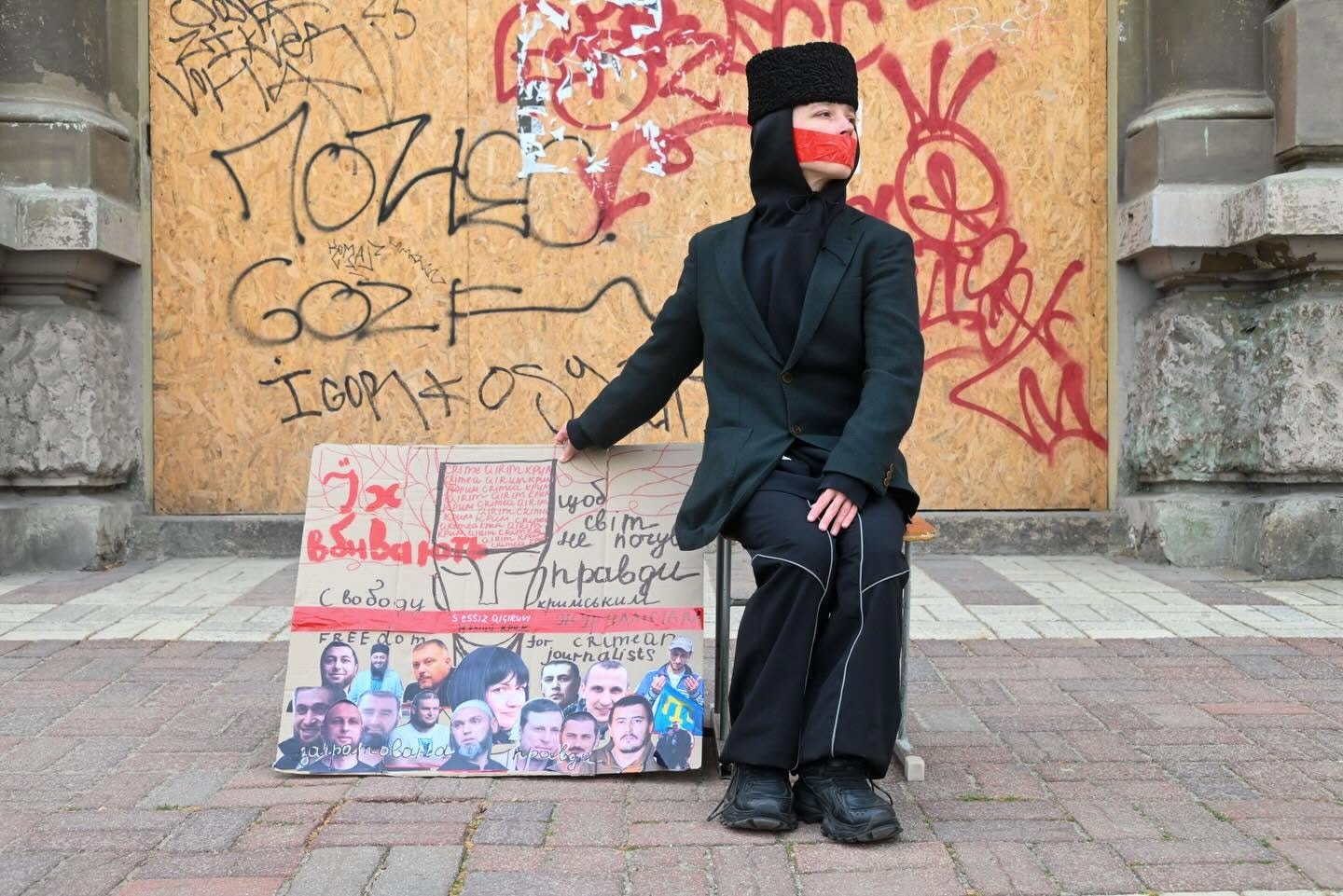
AZIZA: Yes. The russian gulag still exists. There they kill you slowly, and they try to change your mind and transform you into a slave, transforming you into somebody who lost everything, lost dignity. I really don’t feel this distance between me and my people under the occupation. Until they suffer, I can't be free of this. I’m a part of this. Sometimes it is beginning to feel like madness, too. I feel like I’m part of my nation, and I can't enjoy the world because it reflects this illusion of peace back at me.
“Is Europe asleep, or do European thinkers believe that sleep is preferable to the grim reality of uncovering the painful culture of Russian inferiority, exposing the grand fraudulent scheme, and discerning the repulsive traits of Russian ‘greatness’ which, by various means, destroys everything different, everything that might become a competitor, everything that might influence the world, and thus be heard?”
An excerpt from the monologue Aziza Eskender delivers during her “Colony” performance.
MAKSYM: “The Colony” is one of the most powerful performances I have ever witnessed. Many more people abroad need to see it. Thank you for it!
You use the Ukrainian language in your art alongside Crimean Tatar. Those words you put on your paintings? Some of them are also Ukrainian. You speak in public in Ukrainian. And during your shows you mention that you also identify as a Ukrainian. But, for example, many foreigners would find it puzzling. So imagine that person: they have no idea how to combine those two. How would you explain, as simply as possible, how your Crimean Tatar self and your Ukrainian self exist in one and overlap organically?
AZIZA: A Crimean Tatar person asked me once, when I said I speak only Ukrainian as a principle: “Don’t you think of it also as assimilation?” I don't see it that way. Speaking and thinking in Ukrainian helped me find my way back to speaking and thinking in Crimean Tatar. That was not the case when I was speaking russian. But after I switched to Ukrainian, I also started creating art and new senses in Crimean Tatar, too.
For me, Ukraine is historically one of Crimea's best partners. Our shared anti-colonial solidarity dates back a long time. We share the same colonial abuser. And we share the same goal: we must defend our nations and bring them justice. Freedom is at the core of both our nations.
Also, Ukrainian national identity is inclusive and tolerant. Ukrainian nationalism comes from a place of confidence: when you feel whole, you respect other cultures. When it is lacking, that’s when your nationalism becomes violent, dismissive towards minorities, treating them like nothing and nobodies - like russian nationalism does.
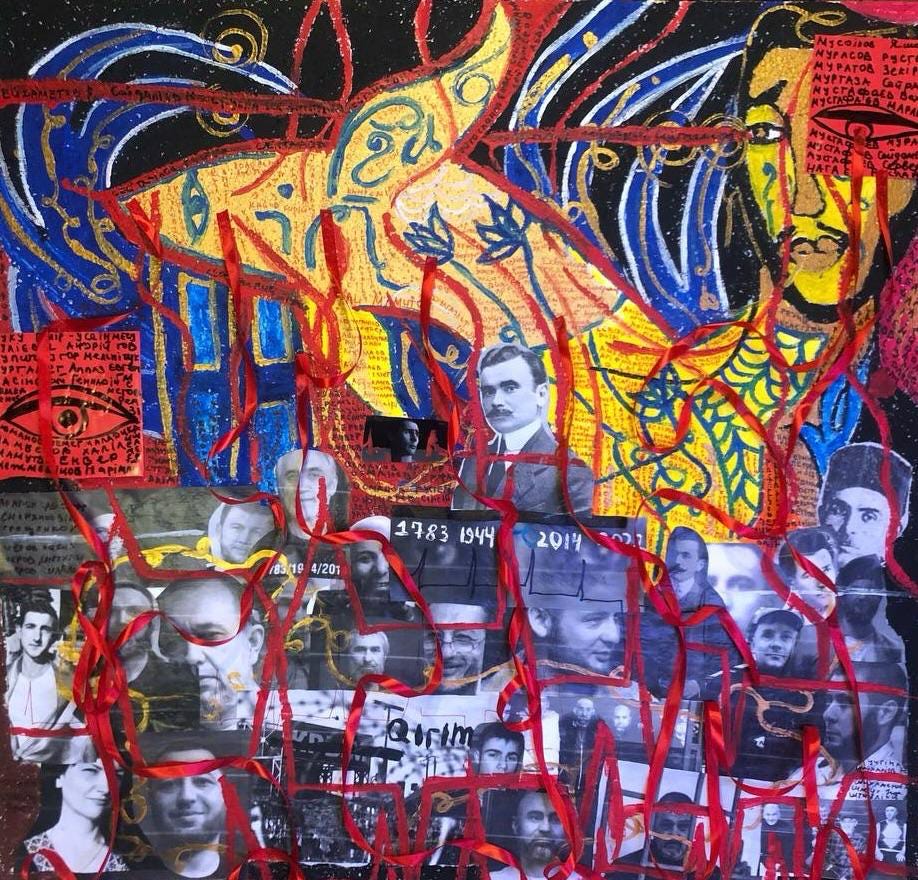
“‘Project Russia’, with its stolen name from Ukrainian ancestors, has for centuries been striving to hide in its own wardrobes and amongst its exquisite collections of world literature the corpses of raped children and women, mutilated lives and stolen national historical artefacts – all this under the guise and with the deep conviction of the great missionary work of the marvellous, unique Russian world, where ‘peace’ means the total defeat of humanity amidst the struggle for a future that is possible only for nations possessing the subjectivity to choose freedom.”
An excerpt from the monologue Aziza Eskender delivers during her “Colony” performance.
MAKSYM: And this happens despite the very, very complicated history between Crimean Tatars and Ukrainians. This coexistence hasn’t emerged easily. You yourself carry this ancient tradition of Ukrainian and Crimean Tatar artists who have been manifesting anti-colonial solidarity for generations. For example, Dr Rory Finnin describes this tradition at length in his book “Blood of Others”. From Taras Shevchenko in the 19th century, Ukraine’s most celebrated poet, to Jamala, one of the most recognisable Ukrainian artists abroad today. Any specific Crimean Tatar, or maybe Ukrainian, voices from the past that you would love foreigners to discover today and that inspire you in your art?
AZIZA: Sabriye Erecepova. My legend, the person who inspired me to sing, to discover Crimean Tatar songs. She lived under russian occupation and during the deportation of the Crimean Tatar nation to Central Asia. So she couldn't sing openly about what she wanted to say. But that’s where the storytelling tradition of Crimean Tatar songwriting helps: the ability to speak through soundscapes, voice modulations or rich metaphorical language.
On some level, this stems from the old Islamic tradition of Sufi dervish art (a spiritual tradition from medieval times in which rhythmic whirling, music, poetry, and movement become a form of meditation, symbolising the soul’s journey toward God, inspired by the teachings of Jalal al-Din Rumi. - ed.) It was especially strong in Crimea. By the way, Kezlev in Crimea, where I grew up, has the only surviving dervish tekke (a Sufi lodge), dating from the 15th century. There were many more, but russians destroyed them.
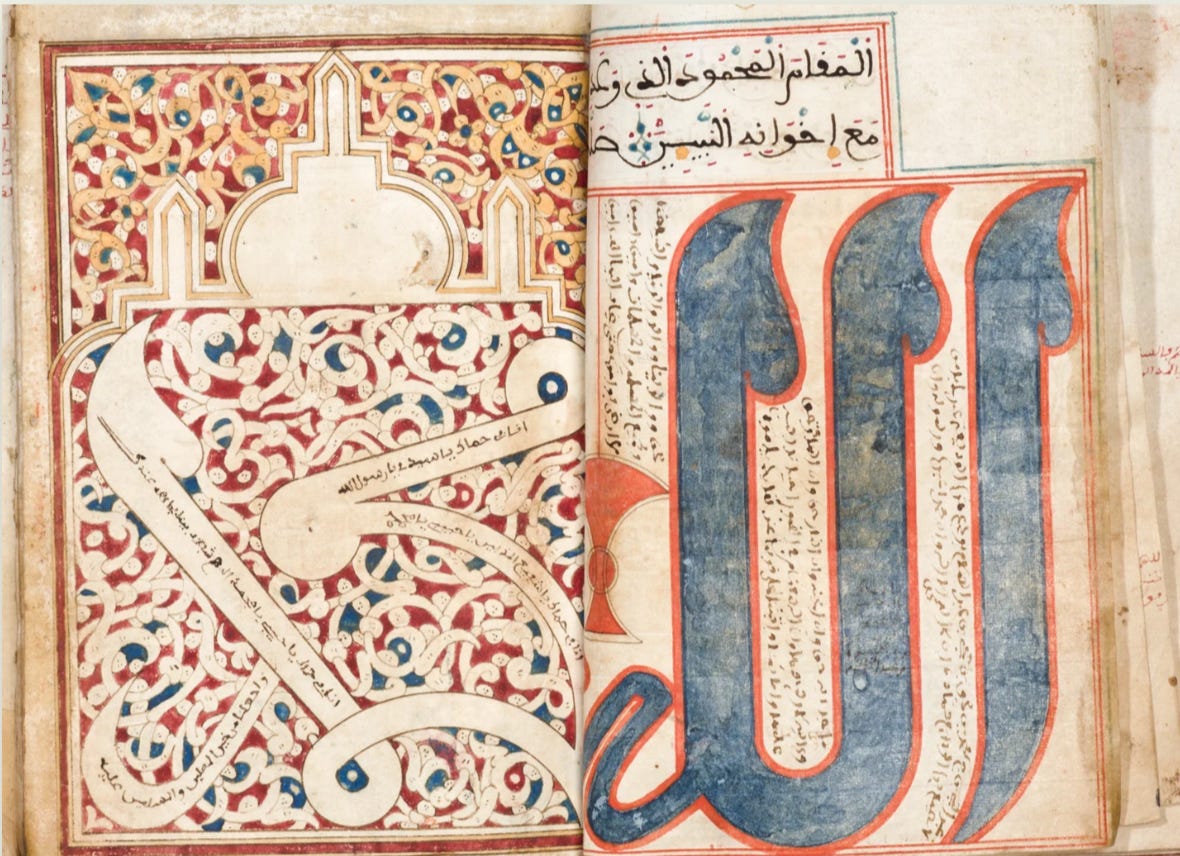
“I gaze at my own faceless reflection, trying to convince myself that I do have a face. This lie gnaws away at me, scarring me with fear and subjugated meekness. They whisper: ‘Now you think like a Russian, so that there may be no war, no talk of peace, no talk of equality—all reduced to a single component of a conspiracy, whilst everyone remains silent, silent about the theft.’ What has been stolen will be stolen a second and a third time; thus, this endless, hushed-up evil will become a criminal law for the whole world, a humiliation that starves one to the bone. Do not be a victim; enough of being a victim; nobody likes victims; people support the strong, not the weak. Don’t cry.”
An excerpt from the monologue Aziza Eskender delivers during the “Koloniya | degil” (Не | Колонія) documentary performance, which explores the importance of restoring justice to the Crimean Tatar people by recognising their national autonomy.
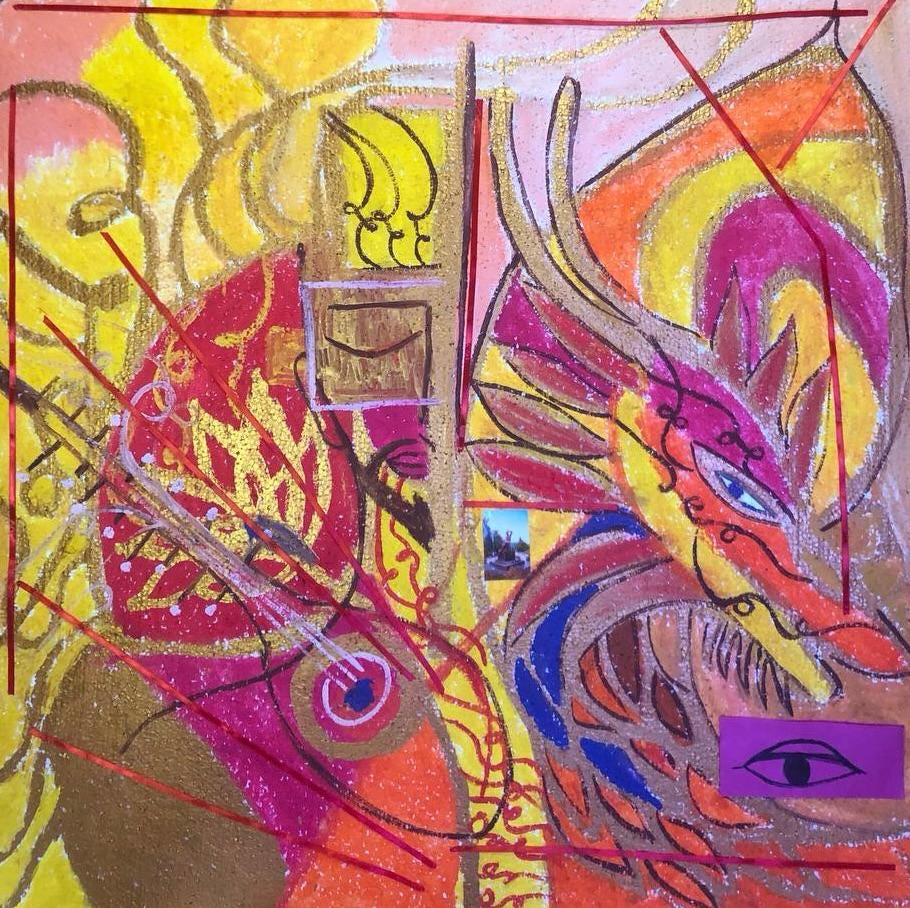
MAKSYM: This reminds me of another ancient tradition of our lands. You often talk about it, too. The Ashiq tradition of travelling singer-philosophers sang about love and the spiritual world, but also about hardship. Ukrainians have a similar tradition in the Kobzars. You embody these two traditions for me. When you talk about hardship in your art, do you also try to locate joy in your storytelling, as they did? So your audience not only learns about the hardship, but also remembers how to resist it: through love, through dignity, through respect for nature nurturing us?
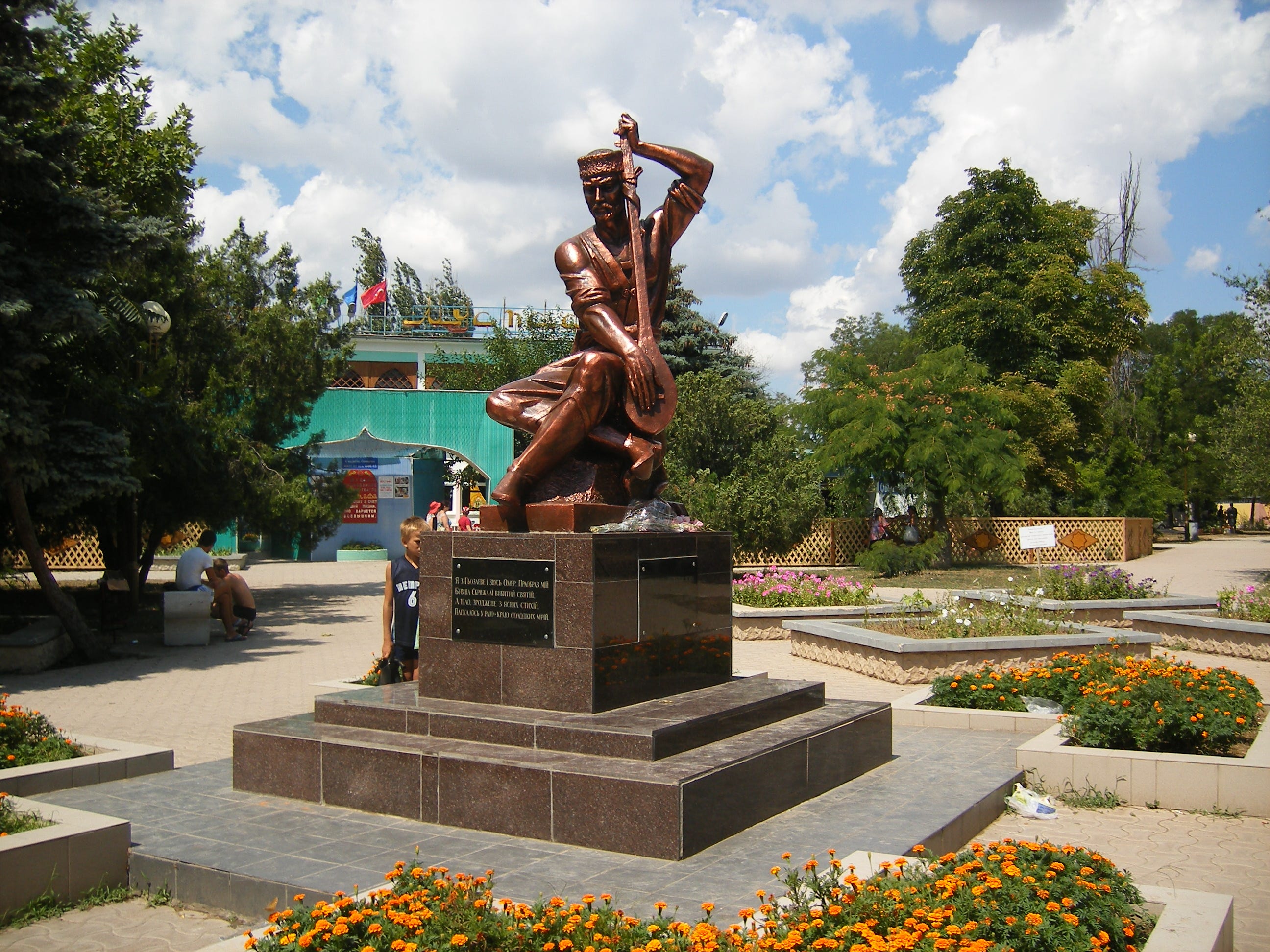
AZIZA: I always strive for the same balance. In Kezlev, we also had a statue of Aşıq Ümer, one of the greatest Ashik poets who lived there. My father told me that we had Ashiqs among our ancestors. His granddad was an Ashiq. So it is in my roots. Even when I write music in trip-hop or doom metal, I see it as a continuation of my Ashiq ancestors. Like me, their job was to find the light and the truth inside of the darkness. To reflect the truth and reality. Because if you live in fake joy, it will be your poison. If you face darkness and choose to run from it, that’s, of course, your choice. But with my art, I want to inspire people to be brave enough to see through this darkness.


When I talk to our defenders in Ukraine, they share how hard it is sometimes for them to come back from the frontline. Their life feels easier there; they don’t need to hide who they are. I want the rest of us to do the same: find and embrace our real identities.
One day I will be creating art that has nothing to do with trauma. But to do so, I need to heal. And I cannot heal if the people who are committing crimes against us do not face justice. Together, we have a real chance to ensure they do.
I cannot bear to hear the Russian language.
In it, I hear an affront to the dead and the unborn.
It rapes me.
It burns away the last grains of truth and love for future generations, as if whispering a lullaby: you will never see the future; there will be eternal war here; here there will be the eternal cycle of the past of Russian thought.
An excerpt from the monologue Aziza Eskender delivers during the “Koloniya | degil” (Не | Колонія) documentary performance, which explores the importance of restoring justice to the Crimean Tatar people by recognising their national autonomy.
Russian Colonialism 101 is the first newsletter to shed light on Russian colonialism and is part of the Volya Hub network. What is happening to Ukraine has happened many times before, and the rest of the world has been conditioned to overlook or misdiagnose it. This isn’t history. It’s how you stop being shocked by what was always predictable.
“I am a big fan of your work and find it accessible for seeing the larger picture that people seem to be misunderstanding—without this digestible explanation of the history—to appreciate empire strategy and mindset at play currently.”
by Jessica Bee, a paying supporter of Russian Colonialism 101.
By popular demand, and for anyone wanting an alternative to supporting this newsletter on Substack or Patreon. Subscribe via Buy Me Coffee.
THIS WEEK’S ANTI-COLONIAL READING LIST:
This week’s suggestions connect to the interview with Aziza Eskender, so you can explore the Crimean Tatar and Ukrainian context orbiting her work and all the many references she mentioned: