

Russian Colonialism 101 is the first newsletter to shed light on Russian colonialism. The opening essay is public; the curated reading lists and an advice column are behind a paywall. This newsletter is part of the Volya Hub network, expanding global awareness of Russian colonialism.This edition will be available free of charge to everyone as a tribute to the fallen Ukrainian hero David Chichkan. Please send your appreciation to the fundraiser for Ukrainian queer soldiers defending Pokrovsk, run by the Ukrainian organisation 'Kharkiv Pride.’
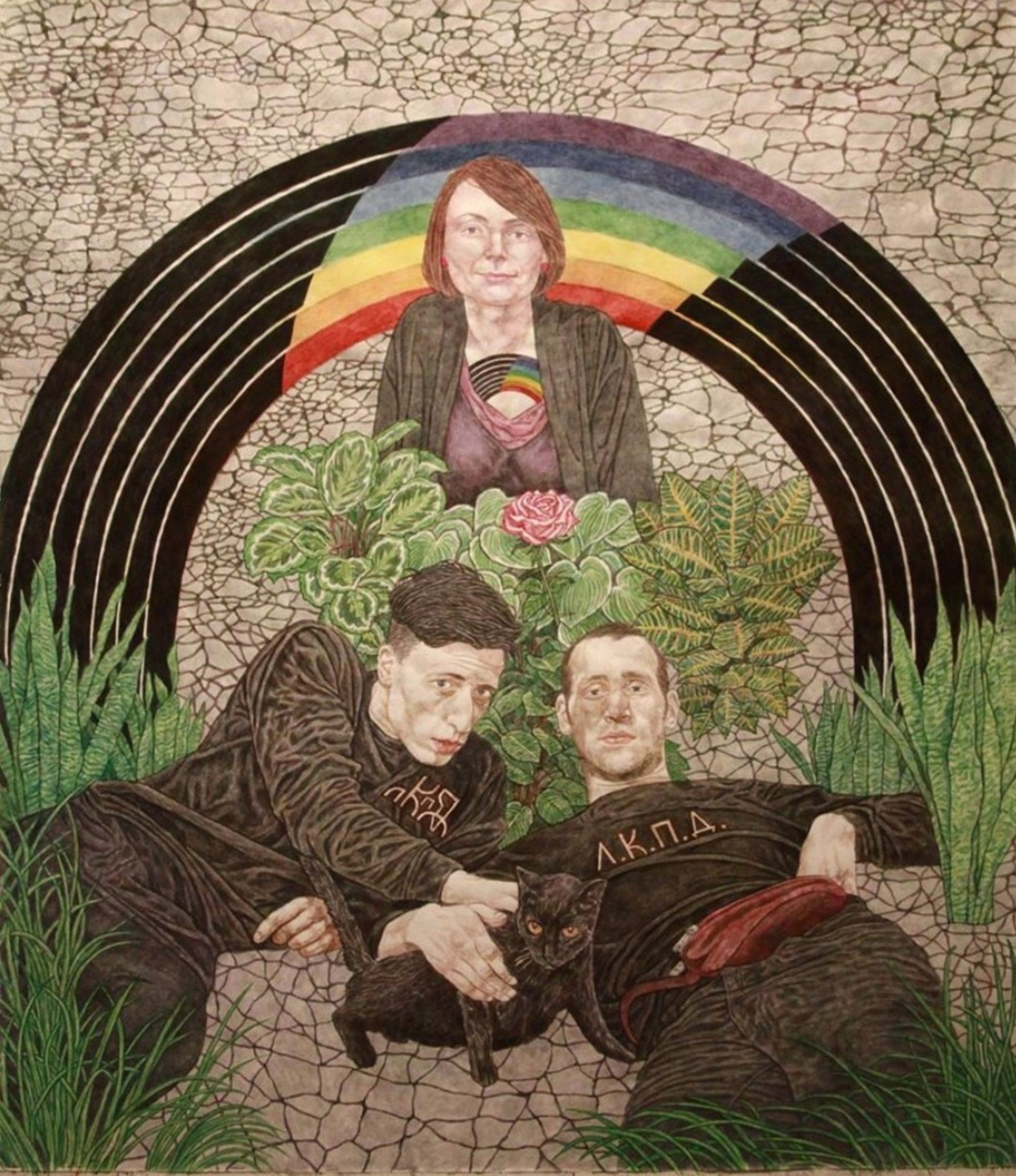
This was one of those books I couldn't stop discussing with my foreign friends at the time - the gorgeously illustrated Ukrainian Code on Administrative Offences, published in 2017. An anarchist artist illustrating a legal code – in that mind-blowing contradiction, there was the essence of modern Ukraine: wild creativity, obsession with the rule of law and democracy, unapologetic cult of sovereignty.


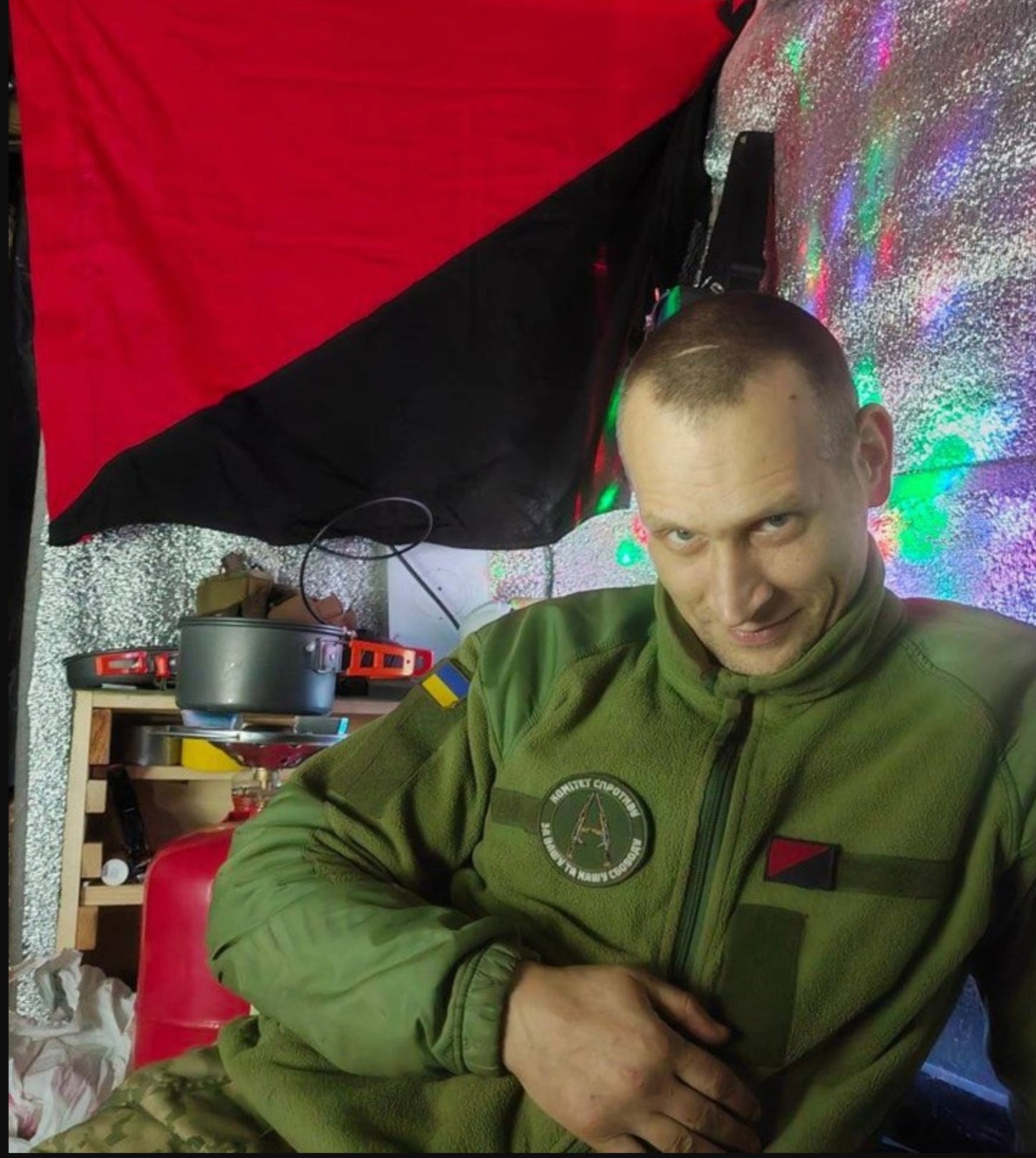
The artist was David Chichkan.
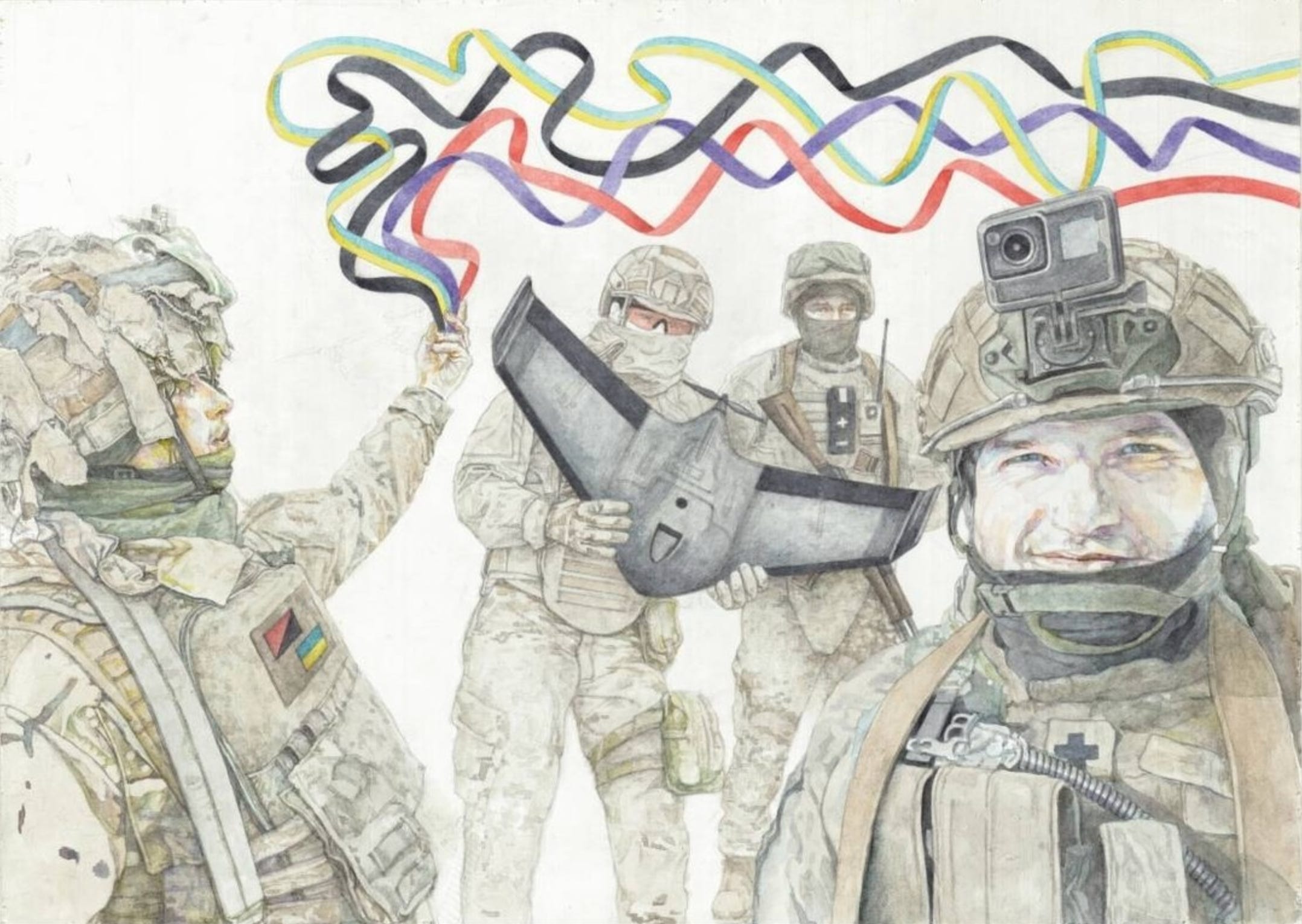
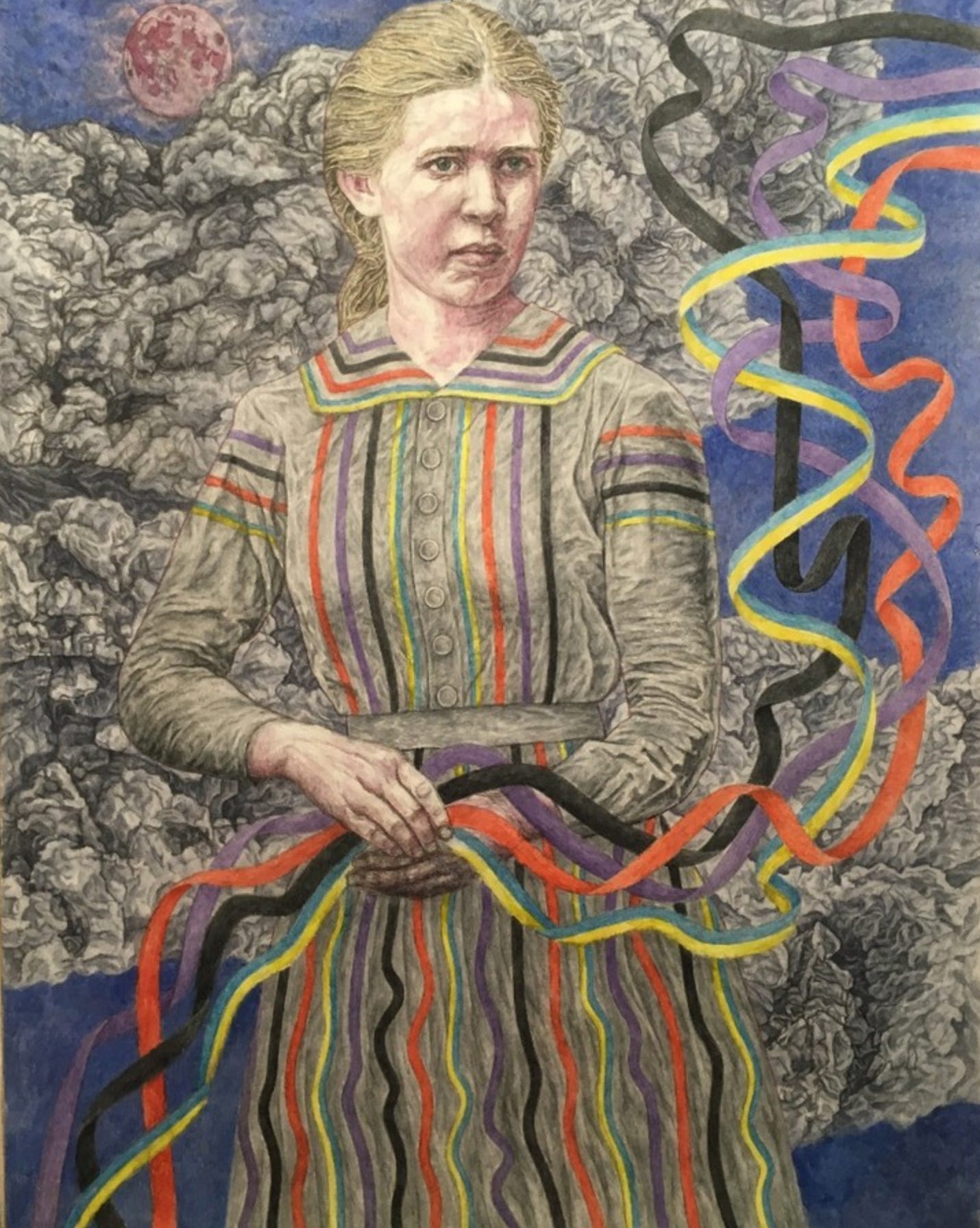
Just days before the 2022 full-scale invasion, he opened a show called ‘Ribbons and Triangles,’ where he reimagined Ukraine if it had never been recolonised by Russia in 1920: a progressive, revolutionary, socially liberal and independent European country; an unrealized modernist project, the ideological foundations of which were laid by Mykhailo Drahomanov, Ivan Franko, Lesya Ukrainka and other Ukrainian left-wing intellectuals. Amid the pre-genocide anxiety in Ukraine, David invited us to find comfort inside his escapist world of fictional Ukraine. Where Russian red fascists did not destroy the Ukrainian People’s Republic, and now Ukraine thrives as a European social democracy. David believed that blue and yellow symbols were not enough to fully convey the idea of this country. Therefore, he added three more ribbons of different colours: black, as a symbol of anarchism; purple, the colour of feminism; and red, socialism, which, according to David, is an integral part of the very idea of Ukrainianness.


When I saw that, I was blown away — “it must go on a worldwide tour ASAP,” I thought. However, several weeks later, like most Ukrainian artists, Chichkan put his art aside and took up arms to defend his homeland.
Russians murdered David Chichkan on August 9th, 2025, while he was defending my ancestral region of Zaporizhzhia.
But while Ukrainian creators get killed by Russians, Russian culture claims victimhood and secures platforms worldwide. Anyone can name Russian artists – "Tolstoyevski" and whatnot. But how about David Chichkan, Victoria Amelina, Maksym Kryvtsov, Pavlo Li, Nika Kozhushko? Any of the 200+ Ukrainian artists Russia killed recently? How about Vasyl Stus or Alla Horska, or tens of thousands of Ukrainian artists murdered during three centuries of Russian colonial occupation?
You probably haven't heard of these names representing a 40-million-nation with a history dating back a millennium. This isn't accidental. It's an old pattern that spans well beyond Ukraine. And every time we platform Russian culture without acknowledging this context, we reinforce centuries-old imperial violence.
Different Russian regimes, same playbook.
During my book shows and lectures, I often show one of my favourite Ukrainian pictures: six young writers from the 1925 collective Lanka, radiating youthful brilliance. Within a decade, Russian authorities executed three and sent two to concentration camps. Their crime? Creating Ukrainian art.
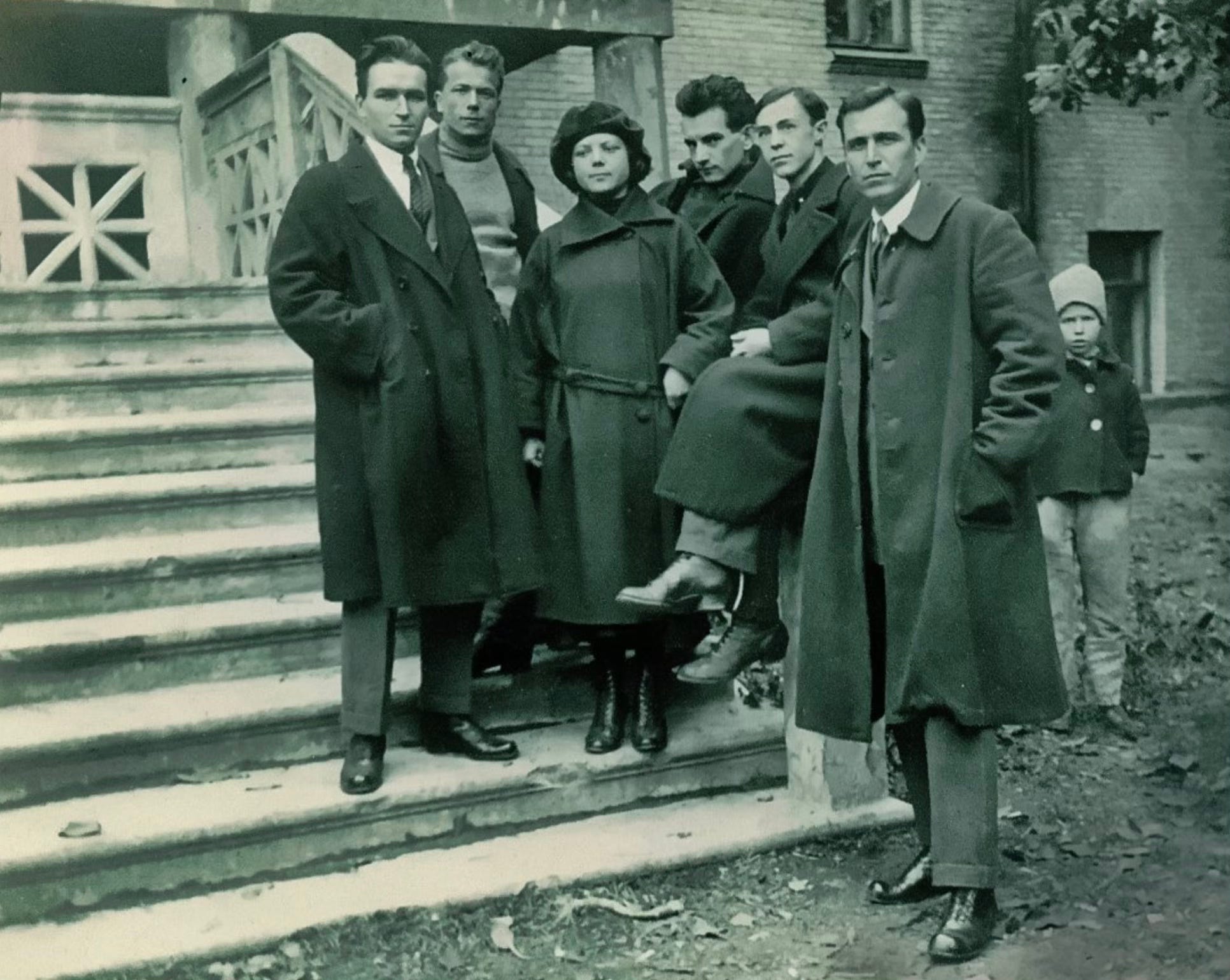
This pattern spans centuries. Russia banned Ukrainian books since the 18th century, outlawed the Ukrainian language in 1863 by declaring it "never existed, does not exist, and shall not exist," then executed 228 of 260 prominent Ukrainian writers in the 1930s. Then I mention Russia committing the same violence against dozens of other nations in Europe, Asia, and North America - for centuries. Today, Russians bomb Ukrainian museums, theatres, and schools. Same playbook, different era.
Yet, there’s always a question that follows from the audience with a concern for ‘Russian great culture.’ Should we cancel it? Separate it from military aggression? If, after learning about the endless cultures Russia has erased, your immediate concern is protecting Tolstoy books, then Russian imperial propaganda already occupies your consciousness.
Russian culture is the weapon.
The phenomenon of "great Russian culture" exists not because Russians possess superior talent, but because they systematically destroyed neighbouring competitors. In my guidebook, ‘Russian Colonialism 101’, I document 48 Russian invasions in just 111 years. And Russian cultural supremacy was the excuse to do all of them.
The mechanism is simple: eliminate local artists, appropriate surviving art, rebrand it Russian, flood cultural space with "great Russian culture" – from Pushkin, Tolstoy to Solzhenitsyn, all vocal imperial myth promoters. Finally, convince everyone that the conquered never possessed an authentic culture, anyway.
When you rob colonised peoples of their storytellers and thinkers, erasing their otherness and pacifying them becomes effortless. Ukrainian writer Victoria Amelina termed this "Execute Culture" – Russia's habit of literally murdering cultural voices of countries it seeks to control.
"Russian manuscripts don't burn; that might be true. But Ukrainians can only laugh bitterly. It's imperial manuscripts that don't burn; ours do. They are burning now, while the world debates whether it should ‘forgive’ Russian imperial art and literature," Amelina wrote before Russians murdered her in 2023.
Western complicity and Imperial Privilege.
Few foreigners, even among Ukrainian friends, still get it. Most Western countries remain key global venues for platforming Russian voices, provided they self-label "anti-war."
Right at the same time as we are burying David, a huge literary festival in Scotland is boosting with lavish publicity a Russian ‘opposition’ figure, Yulia Navalnaya — despite her well-documented record of arguing against arming Ukraine and spreading Russian imperial myths. Earlier this summer, one of Europe’s largest art fairs, Art Basel, proudly displayed a massive painting by a Russian artist — in a tired, yet no less gross display of Soviet propaganda fetish. And the Peckham Rye Station in London lent its historic waiting room this June to host a highly-publicised exhibition by a Russian artist, too. Every week brings numerous examples like this.
But Russian artists aren't experiencing mass murder. Ukrainians are. Russian artists get a wide access to foreign platforms today precisely because centuries of unfair competition silenced millions of indigenous voices in the name of Russian culture.
If we stay blind to this inherited power imbalance during an active genocide of Ukrainian culture, we are picking a side.
Ukrainian artists Lia Dostlieva and Andrii Dostliev warn us that even "good Russians" cannot see their imperial privilege. They demand equal participation in international Ukraine discussions, as though their culture hasn't spent centuries erasing Ukrainian and dozens of other indigenous cultures. And foreigners often play along.
“The historical lack of understanding of Russian culture as imperial and colonial by nature, and of its bearers as people who belong to a privileged group, along with the firmly engraved perception of Russian culture being more important in comparison with the cultures of neighbouring countries has resulted in the current Western belief that the suffering of Ukrainians, killed by Russian artillery and bombing, are largely equal to the inconveniences of Russian civilians,” the Dostlievs write.
Beyond Cancel Culture: deconstructing Russian culture.
David Chichkan often lamented foreigners' difficulty comprehending that the Russian army exemplifies modern fascism. And like with every supremacist ideology, culture serves as an integral weapon for it.
I am not naïvely expecting you to send Russian books to garbage bins and pick up indigenous authors from Russian ex-colonies, instead. However, shouldn't the minimum requirement be critical consumption of Russian art through anti-imperial lenses?
One of my favourite Ukrainian voices, an artist and filmmaker, Oleksiy Radynski, calls it ‘the deconstruction of Russian culture. Not burning books, but consuming them critically. Seeing them through the eyes of people whose cultures were destroyed for Russian civilizational greatness. Questioning why we say "great Russian culture" but never "great Ukrainian" or "great Qazaq culture."
Today, Kyiv laid David Chichkan to rest in a heartbreaking yet defiant mass funeral at the Maidan Nezalezhnosti. David was surrounded by friends and the colours he loved the most - a rainbow, which includes purple, red, black, blue and yellow.


While Ukrainians mourn David Chichkan, Russian artists compete for the same grants, gallery exhibitions, festival slots that Ukrainian artists cannot pursue – because they're dead, kidnapped, displaced or defending their homeland.
Foreign institutions face a choice: continue treating Russian and Ukrainian culture as equally deserving of platforms, or recognise that during active cultural genocide, platforming Russian culture constitutes complicity.
When Russians murder Ukrainian artists, they're not merely eliminating an enemy – they're advancing a centuries-old project to erase Ukrainian culture entirely. Each time we present Russian culture without acknowledging this historical context, we enable the success of Russian imperialism.
Peace requires justice. Justice demands understanding. Understanding becomes impossible when Russians continue speaking over the people whose culture their country seeks to destroy.
Rest in power, David.
The empire will fall.
m.
An excellent article. I'm delighted to see you posting again.
I'm currently in a fight to stop a performance of russian music by a symphony in Mississippi. We just learned about it yesterday and immediately sprang into action. We're doing it for every reason you laid out so beautifully here.