

here is what's in store for you this week:
(estimated reading time: 17 min)
A talk with one of the most important anti-colonial voices of wartime Ukraine around her collection of essays, just published in English.
Why some of the most insightful Ukrainian writing today isn’t about the battlefield at all — and how it can help the rest of us to survive what’s coming.
Learn the origin story of russian imperialism that russia keeps setting on fire.
How the world prefers victims who stay victims, and why Ukrainians refuse the role.
Learn more about the unlikely fighters of the Ukrainian resistance and the lessons they offer for the survival of democracies elsewhere.
The number of must-read Ukrainian writers we mention is just wow.
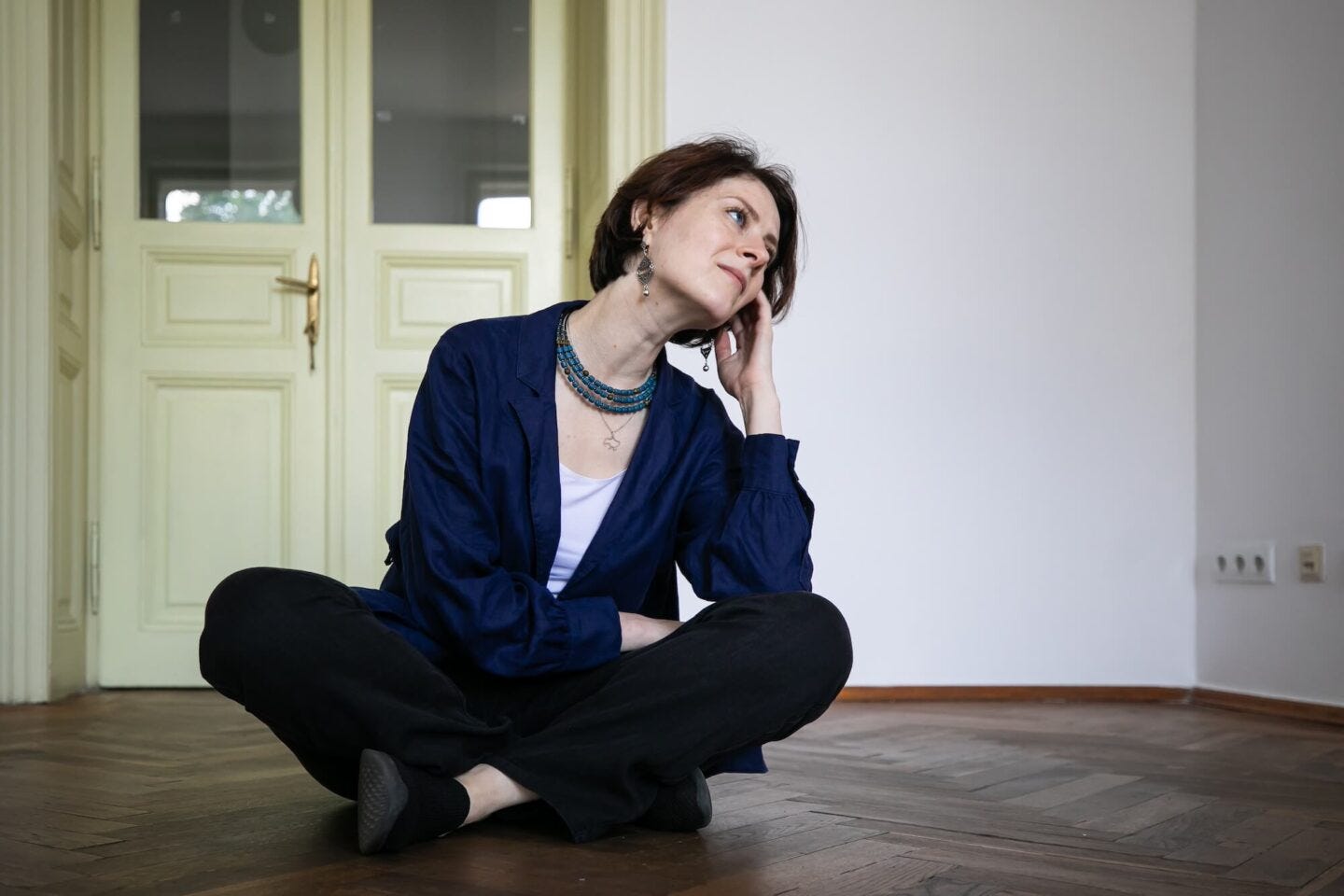
Let me be perfectly honest from the start: nothing in this interview resembles impartial journalism. It is a conversation between a long-term fan and the person he considers a brilliant voice of his generation.
If you read this brief long enough, Dr Sasha Dovzhyk, the head of the INDEX Institute, is not a new name for you: her essays on decolonisation are at the top of my reading lists. For several years I have been begging her to put them into a book for a foreign audience. Finally, it is here. “Apocalypse Baroque” is finally out for your order. I was lucky to read an advance copy this summer — it moved me even more than I expected.
If you love reading me, I have no doubt that you will be wow-ed by Apocalypse Baroque. Still, I wanted to catch up with Sasha before her book tour so you can see a very special side of her and the context behind her writing, which will make your journey with this book even more meaningful and illuminating.
BY THE WAY, if you’d like a chance to work with Dovzhyk in Ukraine, her institute is running a prestigious literary residency in Lviv named after late Ukrainian writer and journalist Victoria Amelina. The topics of your work must relate to the causes, consequences and realities of the russian invasion of Ukraine. The application call is now open.
The interview will be open to everyone for free, and the reading list stays behind the paywall. If you like this conversation, please stop by a fundraiser I am supporting to empower Ukrainian heroes from the 3rd airborne assault battalion "Phoenix" of the 79th Air Assault Brigade with new frontline trucks. If you donate, you get a chance to get a signed copy of Russian Colonialism 101, among other cool things. Manufacturing imperial regret, with your help.
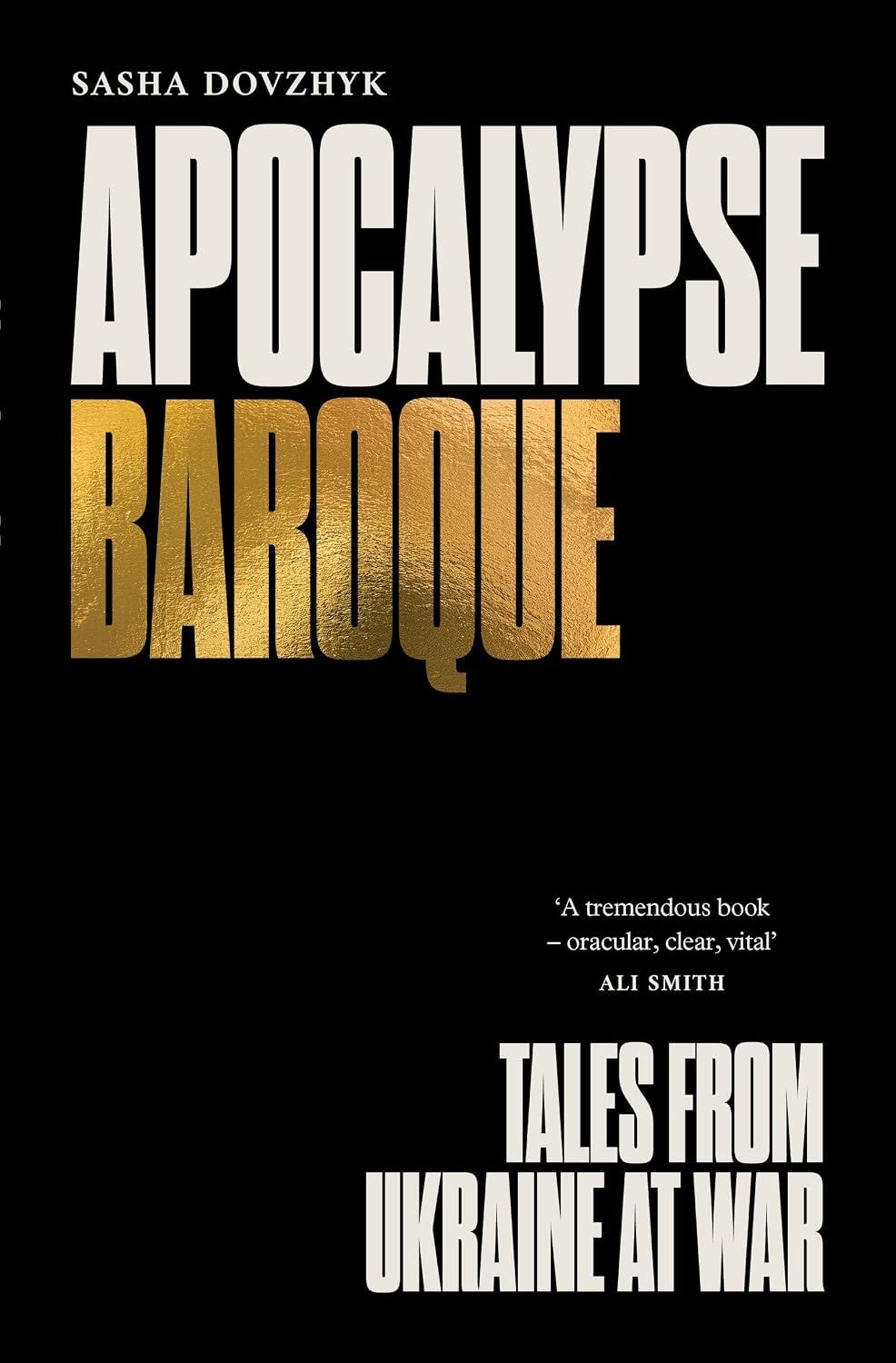
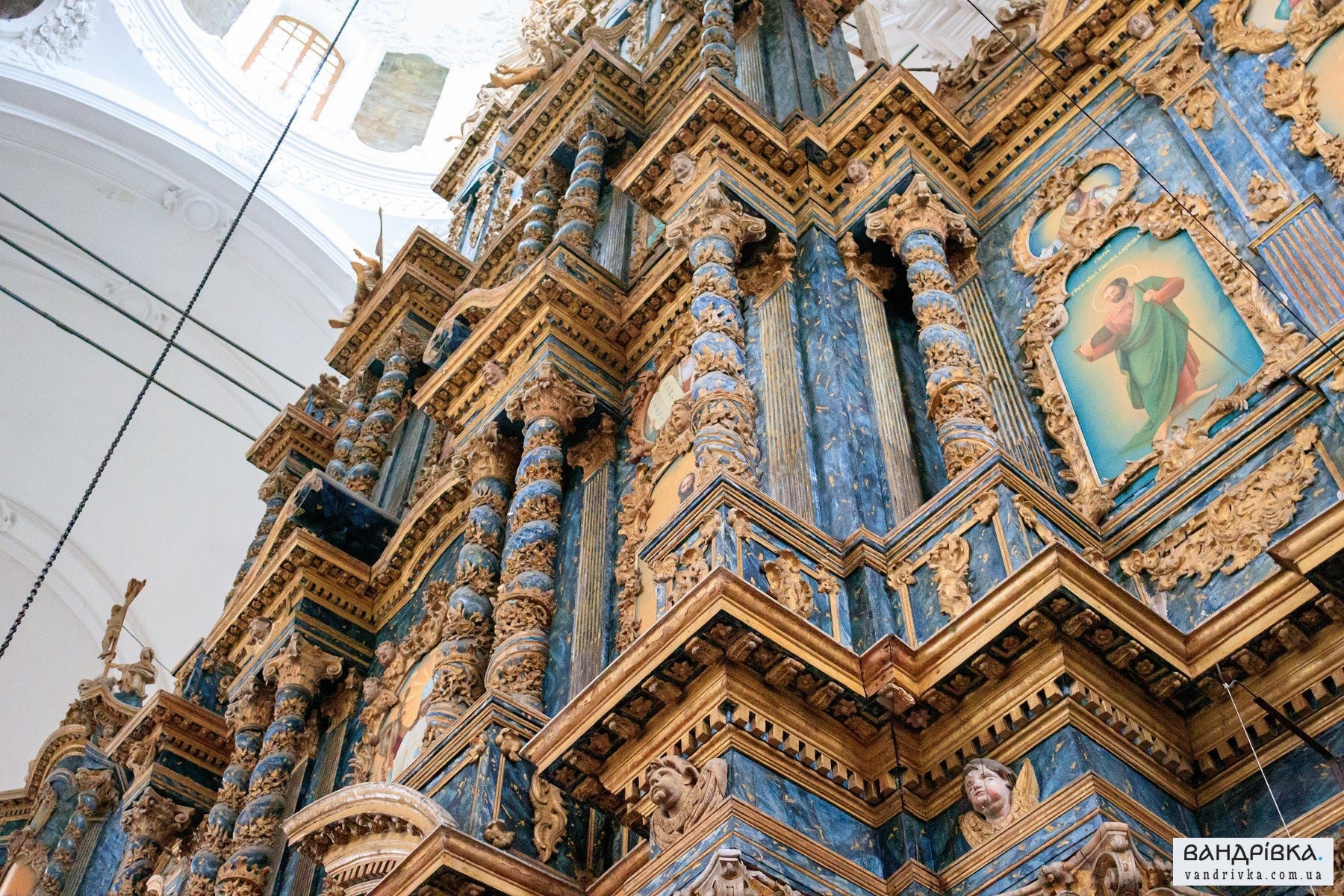
MAKSYM: Let’s start with the title. “Baroque” is a word many Ukrainian thinkers, writers, and artists are mentioning these days. We are referring to the era of the Ukrainian Baroque in the 18th century. Ukraine’s most celebrated living writer, Oksana Zabuzhko, likes to point out that it was perhaps Ukraine’s most distinctive contribution to European culture. But also a strain of the European Baroque that stopped at the Ukrainian border. russia has never experienced it. You yourself build the bridge between today and that era as our multi-generational existence between light and darkness. Why was it important to you to put Baroque right in your title?
SASHA: For me, the Ukrainian Baroque is an intense era in Ukrainian history and culture. We built a major centre of learning and art, the Kyiv-Mohyla Academy, where I also studied. It educated a brilliant generation of theologians, writers, and thinkers. Then they went to Moscow and helped shape the intellectual foundations of the russian empire. So russian imperialism has a Ukrainian origin story. russia has spent centuries trying to erase that legacy, including the destruction of Ukrainian Baroque architecture. Even today, during the invasion, Baroque churches are burning once again. The Baroque carries historical weight for me, but it also appeals to me aesthetically: the interplay of darkness and light is embedded in its very language.
MAKSYM: Wild, isn’t it? Ukrainians absorbed the impulse of the European Baroque era, developed it into something distinctly their own. And then turned it into the original sin of the russian empire by designing russian imperial mythology and culture. This brainchild of Ukrainian Baroque thinkers, like Theophan Prokopovych, Innocent Gizel, and Stefan Yavorsky, still lives on. Moreover, it tries to erase its origins, both literally burning the land and figuratively destroying its cultural blueprint. Because all of this tells us a story russia doesn’t want the rest of the world to know.
SASHA: Something important is buried there. A paradox that keeps haunting us. There’s also something about Ukrainian agency in this story, right? It’s not only us being a victim of this constant russian invasion and erasure. We are also shaped by our own choices. Well, at least by the choices of our ancestors.
MAKSYM: Speaking of the myths and the past, in this book you weave your favourite tales with the real-life stories you documented in wartime Ukraine. Every time I encounter references to Greek, Norse, or Biblical mythology in your work, it brings me so much joy because I see lots of Lesia Ukrainka in it. We both agree she is the most important Ukrainian writer ever to live, and she too turned to ancient European and Jewish mythologies. She was hardly alone. From Taras Shevchenko and Ivan Franko to Oksana Zabuzhko and Moisei Fishbein, generations of Ukrainian anti-colonial voices have found inspiration in these stories. What can a colonised (and modern post-colonial) culture say through these borrowed myths that is harder to say through its own, very ancient, I should add, material?
SASHA: There is power in old tropes, in taking a familiar vessel and filling it with new wine. When you use a symbol or story everyone recognises, such as Little Red Riding Hood, it speaks to readers immediately. But if you then subvert and reinvent it, the effect is even stronger. People react viscerally to stories from their childhood or formative years. I want Ukrainian stories to engage readers beyond Ukraine. So it’s a very conscious choice. At the same time, the book draws on Ukrainian tales as well. It is in the interplay between Western and Ukrainian narratives that the book’s subversion, in form, content, and style, becomes most effective.
MAKSYM: With this, you also do the same bridge-building that Lesia Ukrainka did when Ukraine was partitioned and occupied by empires. She was rebuilding the bridges between European and Ukrainian cultures, which, especially under a russian colonial occupation, were constantly burned. To present Ukraine as alien to the West, integral to the East.
SASHA: Yes, and not only European tradition is appealing to me. For example, the Scheherazade tale from One Thousand and One Nights is one of my favourite characters I mention in the book: a woman who keeps telling tales to survive. She is particularly relevant in Ukraine today. At the moment we stop telling our story, we stop existing.
“I decided to take out my favourite vyshyvanka because there is no point in saving it for some uncertain future’, she explains. Wearing a traditional Ukrainian shirt as if there’s no tomorrow, because there might be no tomorrow. Wearing a traditional Ukrainian shirt while Russian fighter jets are razing your city to the ground, for daring to stand its ground.
An excerpt from Dovzhyk’s “Apocalypse Baroque”
MAKSYM: This also strongly echoes the tradition of the Ukrainian avant-garde writers from a century ago. Especially the quero-futurists, like Mikhail Semenko: they embraced Ukraine's borderline state between Western and Eastern mythology, seeing its potential to revitalise the rest of Western culture. Returning to Ukrainian ancient mythology, my absolute favourite essay in the entire book is built around the Ukrainian tale of Kotyhoroshko (Rolling-Pea). He is a superhero short king who never yields to treacherous fate, always finds ingenious ways to survive and resist. And is often resented for it.
SASHA: The most bewildering part of the story, right? (Both laugh.)
MAKSYM: Absolutely bizarre. But you walk the extra mile, and, in your signature unapologetic vulnerable way, you connect this to your reflection on your own Jewish roots and to the way Holocaust survivors were often faced with public irritation. We were all raised on this tale, but we also always wondered why superhero Kotyhoroshko was hated by so many despite his exclusively good deeds.
SASHA: I’m surprised that anyone but me liked this story because I think it’s quite risky to mix Ukrainian and Jewish stories of survival. Many don’t like the comparison. However, I just went straight into it.
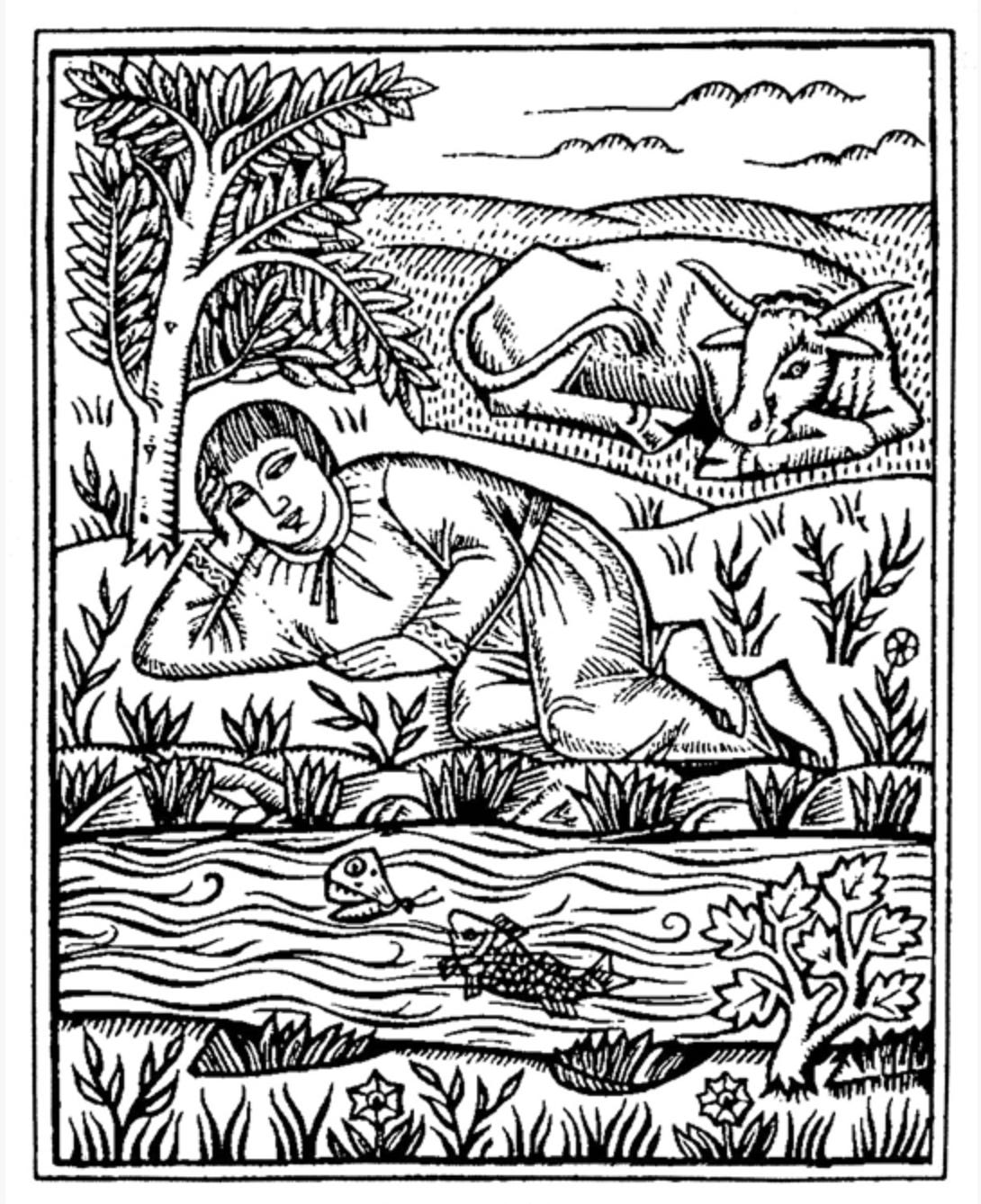
The scholar who first helped me make Kotyhoroshko make sense was Volodymyr Dibrova. In his collection Retellings, he writes about how Kotyhoroshko encounters hostility from almost everyone around him, including his own family. Dibrova explains that Kotyhoroshko embodies the miraculous. People struggle to stand before a miracle. The miracle is blinding. The miracle does not accept transactional logic. Kotyhoroshko acts according to higher laws, exposing the shortcomings of those around him, especially their inability to stand up for freedom. People who sacrifice so much for freedom set an inexcusably high standard for others.
Perhaps this also helps explain why Ukrainians cannot always rely on the support of their neighbours and allies. I was writing this story in 2025, during one of the darkest moments of russia’s war against Ukraine. It was around the time of President Zelenskyy’s horrible, scandalous meeting with Trump in the Oval Office. It was offensive. Whatever one’s view of Zelenskyy, he represented the entire Ukrainian nation that day. Retelling the Kotyhoroshko story became my way of making sense of that moment.


MAKSYM: Zelenskyy is also a short king, right? (Both laugh.) And also a Jewish Ukrainian person sitting in there, being lectured about gratitude and what is feasible and not feasible in the fight for survival. This is still little known abroad, but the mix and intertwining of Jewish and Ukrainian culture on Ukrainian territory has been going on for centuries. At the break of the 19th and 20th centuries, a third of all Jewish people lived on the territory of modern-day Ukraine. Many Jewish cultural figures found their home in Ukrainianness. Hrytsko Kernerenko, Raisa Troyanker, Leonid Prevomaiskyi, Alex Averbuch. Ukrainian scholars Myroslav Shkandrij and Yohanan Petrovsky-Shtern wrote wonderful books about it. But you mentioned earlier that some people might not be comfortable with others being exposed to this nexus, which you are also trying to figure out for yourself. Both in your writing and in your identity-finding quest as someone with Jewish roots. Why do you think it’s uncomfortable? Where do you think this tension comes from, and why?
SASHA: I bring up the Holocaust in a tale about Ukraine not to compare tragedies, but to think about survival and what it demands of those who witness it. The Jewish survivors of the Holocaust are a miracle because they were not supposed to survive. Yet, here they are. That makes the rest who witnessed the massacre uncomfortable, right? We can sort of understand this logic even when we think about the current massacre in Ukraine. We often prefer victims who remain victims, whose suffering can be mourned at a safe distance. Ukrainians are inconvenient precisely because they have refused that role. It would be easier for many outside observers if Ukraine simply succumbed to the slaughter.
Instead, Ukrainian resistance, and the defence mounted by the Ukrainian Armed Forces, keeps asking this open question of the world: how do you sit alongside a people who are still being hunted, yet insist on surviving?
“Loss after loss, betrayal after betrayal, Ukrainians are still here. Loyalty to their fight was the least the president of Ukraine, a Jewish man abused in the Oval Office by the angry mob of anti-semites and Russia sympathisers, could show... While Zelensky’s mighty hosts demanded deference and gratitude, obedience and submission, it was that - the miracle of Ukrainian survival against the odds - which provoked them… Ukrainians, whom Zelensky represented for the Oval Office gang, have chosen to be free and proud of their choice. And if the gift of freedom is unbearable for most people, if being extraordinary means fighting alone, so be it.”
An excerpt from Dovzhyk’s “Apocalypse Baroque”
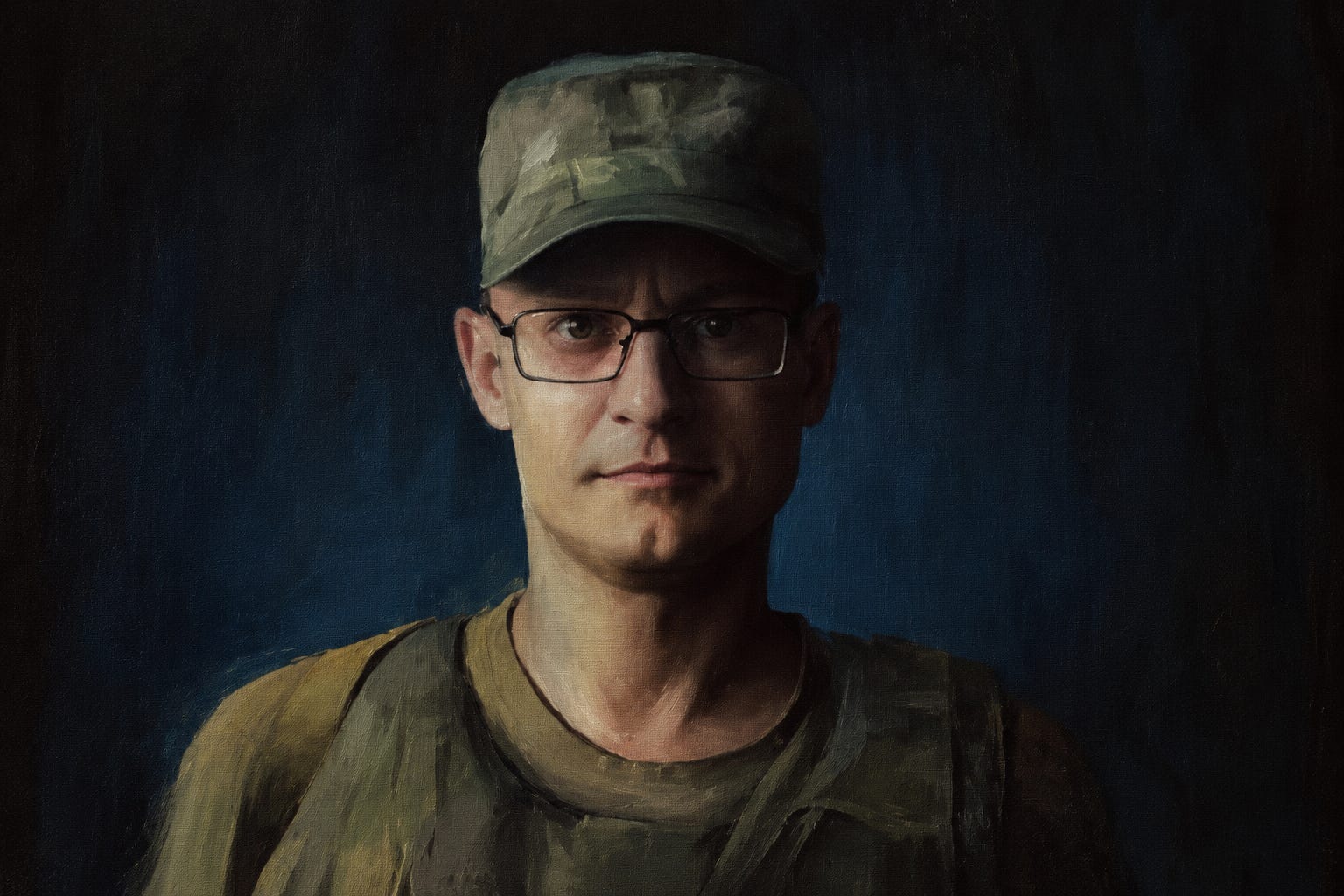
MAKSYM: I’m grateful that you also introduced us in this book to the stories of those Ukrainian fighters rejecting the helpless victim narrative. For example, in the Bookman/Swordsman chapter, you tell the story of Vitalii Pyvovarov, a librarian who joined the Armed Forces of Ukraine and was killed defending us. You say he didn't fit the conventional idea of a warrior. I always think about this gap between what a modern war for freedom really looks like and what the rest of the Free World expects it to look like. Many in other democracies still struggle with the idea that a civilian librarian takes up arms. But the democratic survival over the next decade will require exactly this kind of total defence and the mobilisation of everyone’s skills. Pyvovarov’s loved ones explain his decision to mobilise as an inability to stand aside in the face of injustice. Is that explanation complete, do you think?
SASHA: I simply do not know. I never met the man who died defending me. I can only reconstruct him through photographs and through what others tell me. At the centre of the story is an irreducible absence: the person himself is gone. The accounts I hear from his relatives and friends are, understandably, incomplete and sometimes contradictory. They cannot bridge that gap. When you hear “librarian,” you do not imagine a stereotypical macho: someone bookish, perhaps wearing glasses, not carrying a machine gun. Whether he just couldn’t tolerate the injustice? I guess this is the only explanation I can rely on. This is what his relatives tell me and tell themselves. For me, the absence of a person and of an answer to your question is what moves this story forward. That compels me to write it down.
MAKSYM: We know so many of such unlikely heroes fighting in Ukraine today. Many would tell you about the personal responsibility they feel to defend their homes and their freedoms. When the existential test comes, it isn’t someone else’s professional job to defend it. Everybody has to mobilise. Doesn’t mean everyone ends up in a trench, but everybody has to contribute something daily. And you do feature others, your friends or former colleagues who now resist russian imperialism with arms. One essay portrays Yan, your schoolmate who now serves, whom you also see as a living Cossack Mamay - a semi-fictional fighter from another era of the Ukrainian fight for independence. By the way, I don't know how many handsome Yans our shared home city, Zaporizhzhia, birthed, but I also had a classmate Yan heading our school gang.
SASHA: Also a hooligan?
MAKSYM: Yes, but not the same Yan; I checked (both laugh). How widely do Ukrainians, and soldiers in particular, feel this continuity between generations of anti-colonial resistance? Do they consciously claim it, or is it something writers see in them?
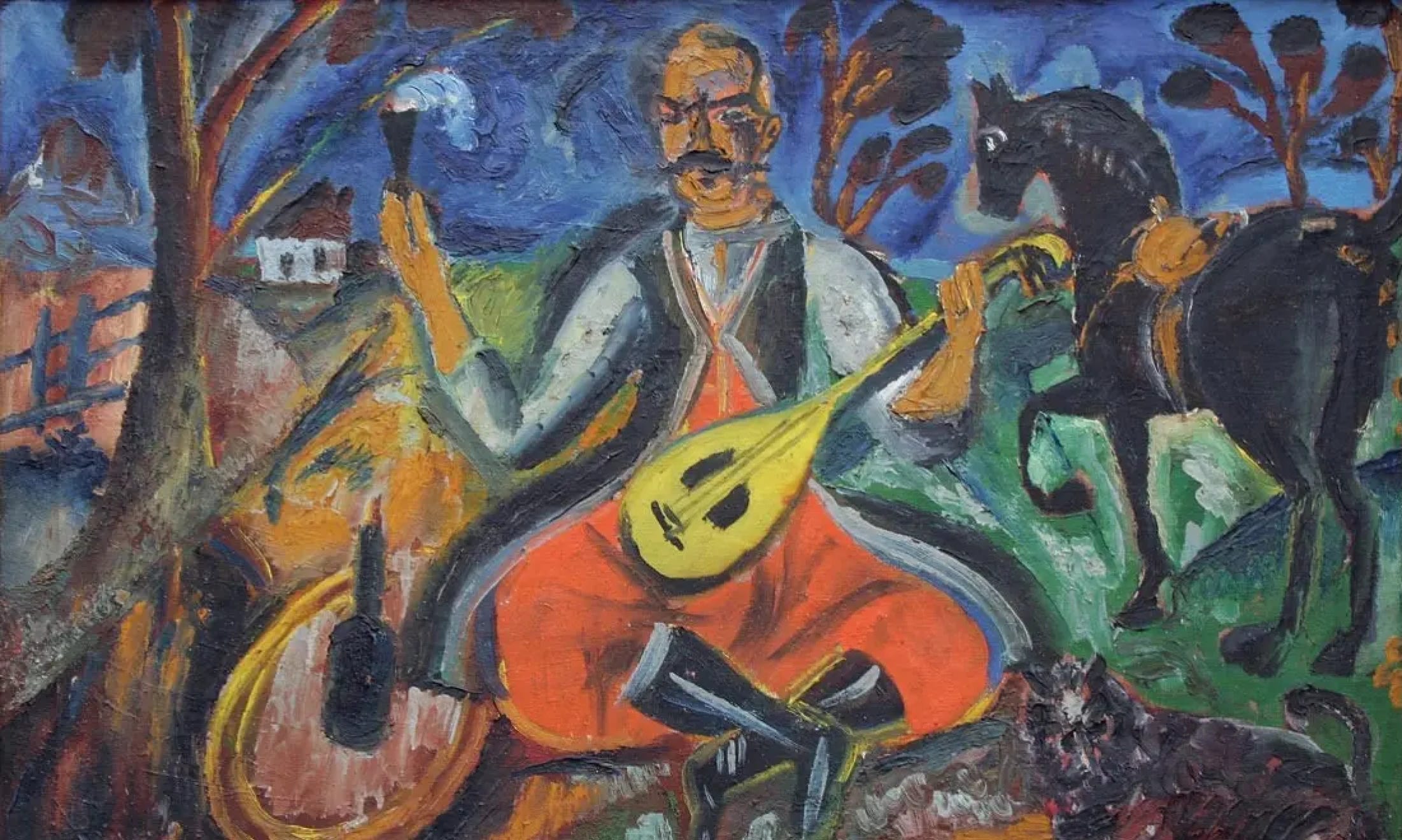
SASHA: I try very hard not to put my own words into my characters’ mouths. In Yan’s case, that’s easy because I did not invent the Mamay comparison; he chose that call sign himself. He consciously fashions himself after a Cossack, wearing an oseledets (a traditional Ukrainian male hairstyle featuring a long lock of hair sprouting from the top or the front of an otherwise closely shaven head - ed.) and a Cossack moustache. Before the full-scale invasion, he worked as an actor in a Cossack reenactment theatre. He clearly sees himself as part of that tradition of resistance and rebelliousness. What matters about Cossack Mamay is that he is not only a warrior but also a storyteller, preserving the memory of Cossack glory. Yan eventually joined the cultural forces within Ukraine’s Armed Forces and became one of the people carrying that tradition forward. And now he’s one of the guys who is singing Ukrainian songs. Well, in his case, it’s not singing; it’s rapping. His work connects the past and present of the Ukrainian resistance. One recent track I heard was about Hetman Mazepa. So here we have another reference to Ukrainian Baroque tradition.
MAKSYM: Hetman Mazepa, basically the father of the Ukrainian Baroque. Tried, but failed, to end Russian colonial control over Ukraine in the early 18th century, and for that russian churches for centuries put his name as anathema, mentioning him in one breath with Antichrist in their liturgies.
SASHA: In russia he is the worst sinner, betraying Moscow. In Ukraine, he is the state builder to whom we are grateful for so many institutions and so much of our cultural heritage. And then in the West he is this mythologised figure featured as this orientalized duke riding a horse through endless steppes, completely wild, having amazing adventures, but also presenting something not quite rational.
MAKSYM: Which is probably the same Western characterisation that Ukrainian fighters, like Yan, would face still today.
SASHA: Precisely.
MAKSYM: We often tell each other it feels like we are living in a warped reality. Seeing the past, present, and future at the same time. All intertwined into stories told centuries ago, yet also happening with us today. You close your book with “we tell a tale, we persevere.” Many Ukrainian writers, me included, live with the same doubt: that storytelling fails us and that taking up arms or building drones - or helping those building drones, like in my case - is a much better way to deploy our talents amid this apocalypse. Where does storytelling sit in this anti-colonial resistance? You are publishing a book, so you still believe in it, but what do you do when you feel it is insufficient?
SASHA: I believe culture is a matter of national security, second only to armed defence itself. One reason russia’s war against Ukraine, beginning in 2014, was so easily ignored abroad is that Ukraine barely existed on the global mental map. There were few cultural associations, few points of reference. Ukraine was a big unknown. After 2022, Ukraine forced its way onto that map through the heroism of those who chose to fight. This was the miracle we spoke about: the world could no longer ignore a nation willing to defend its survival at such cost. But imagine if people had encountered Ukraine much earlier. If they had read Lesia Ukrainka in school, seen Ukrainian plays in their theatres, or grown up watching Ukrainian films. Those experiences would have created an emotional connection and made Ukraine harder to dismiss as a country destined to fall in three days. They would have recognised Ukraine's multi-century tradition of resistance, expected us to resist, and supported us in a more meaningful way.
This is why I want to mention Victoria Amelina. She is a Ukrainian novelist who, at the start of the full-scale invasion, decides that storytelling has failed her. So she becomes a war-crimes investigator, documenting russia’s atrocities. Yet she could not abandon writing. The result was Looking at Women Looking at War, published posthumously after she was killed in a russian missile strike on Kramatorsk in 2023. The book continues her struggle for justice. It is read around the world, including in parliaments, moves people deeply, and is receiving prizes. I know it will remain on this bookshelf for decades to come - if the world survives for a number of decades. I know it will be read, and I know it will be carrying the story of Ukraine forward. Hopefully it will be one of those nails that anchor us on the mental map of the world. That will also help us not to disappear.
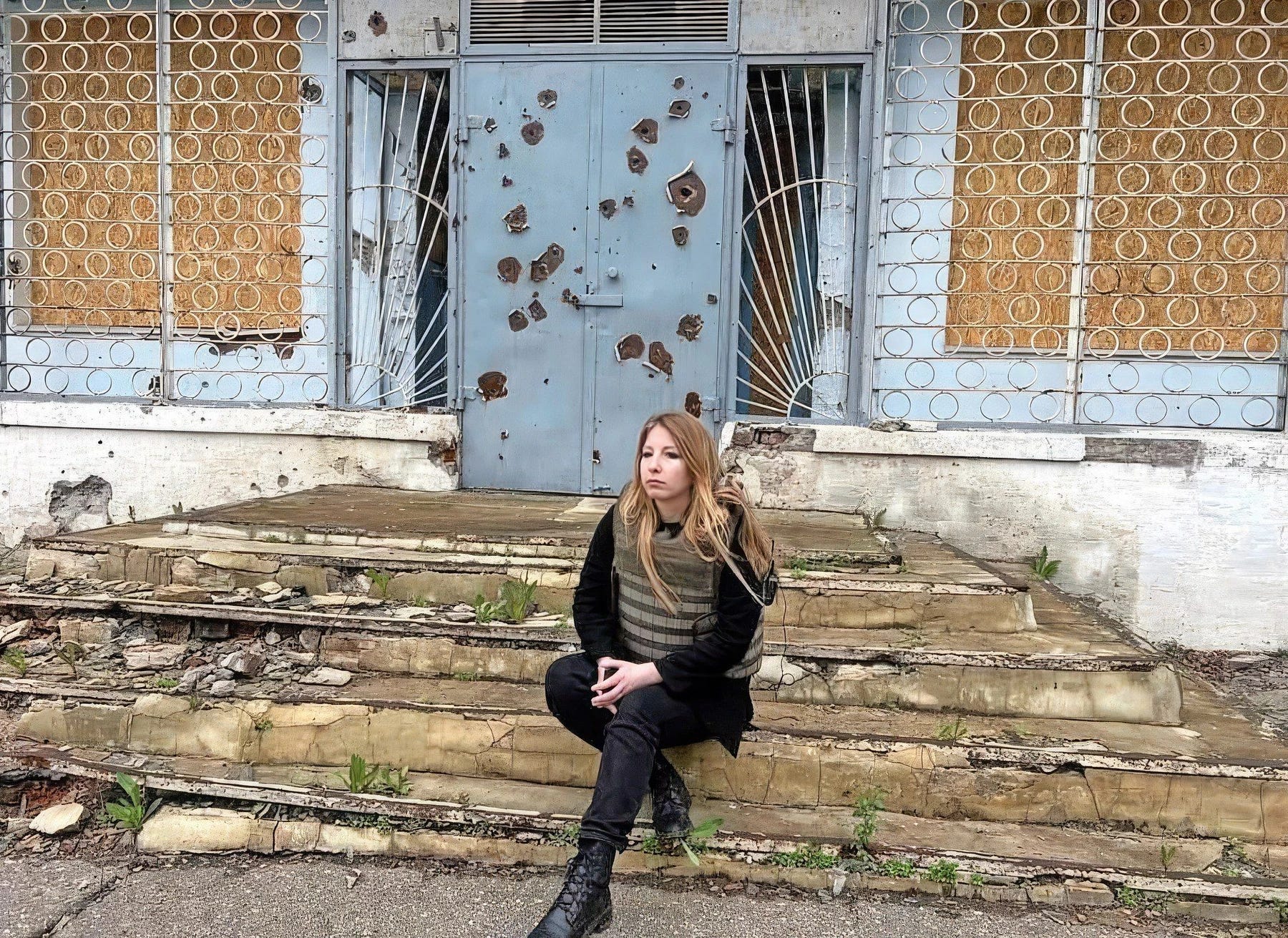
“Russia keeps dreaming of the whole of Ukraine, and the burnt-out Ukrainian landscapes are the stamp of the sleepwalking necrophile.”
An excerpt from Dovzhyk’s “Apocalypse Baroque”
MAKSYM: Recently, I find myself always starting and ending my conversations with something from Oksana Zabuzhko. And I love it. But she has been repeating since 2022 that the only way any culture remains viable is if actual armed forces back it up. Take any culture universally cited worldwide: it's from a nation or state that had enough military power to survive and defend itself long enough. Lastly, let me ask you about the afterword. It is happening to Zaporizhzhia, the city where we both grew up, and which you see again after years of war. You describe that return through Freud’s 1919 essay and the German word “unheimlich”, the unhomely: “the doppelgänger shock of seeing your double, the double of the home city that raised you, in which everything is familiar yet slightly at odds with your memory because everything is touched by the proximity of death and forever loss”. I also believe our Zaporizhzhia tells a story central to understanding what this war is trying to erase.
SASHA: I think probably every good story is the homecoming story, right?
MAKSYM: Hell, yeah.
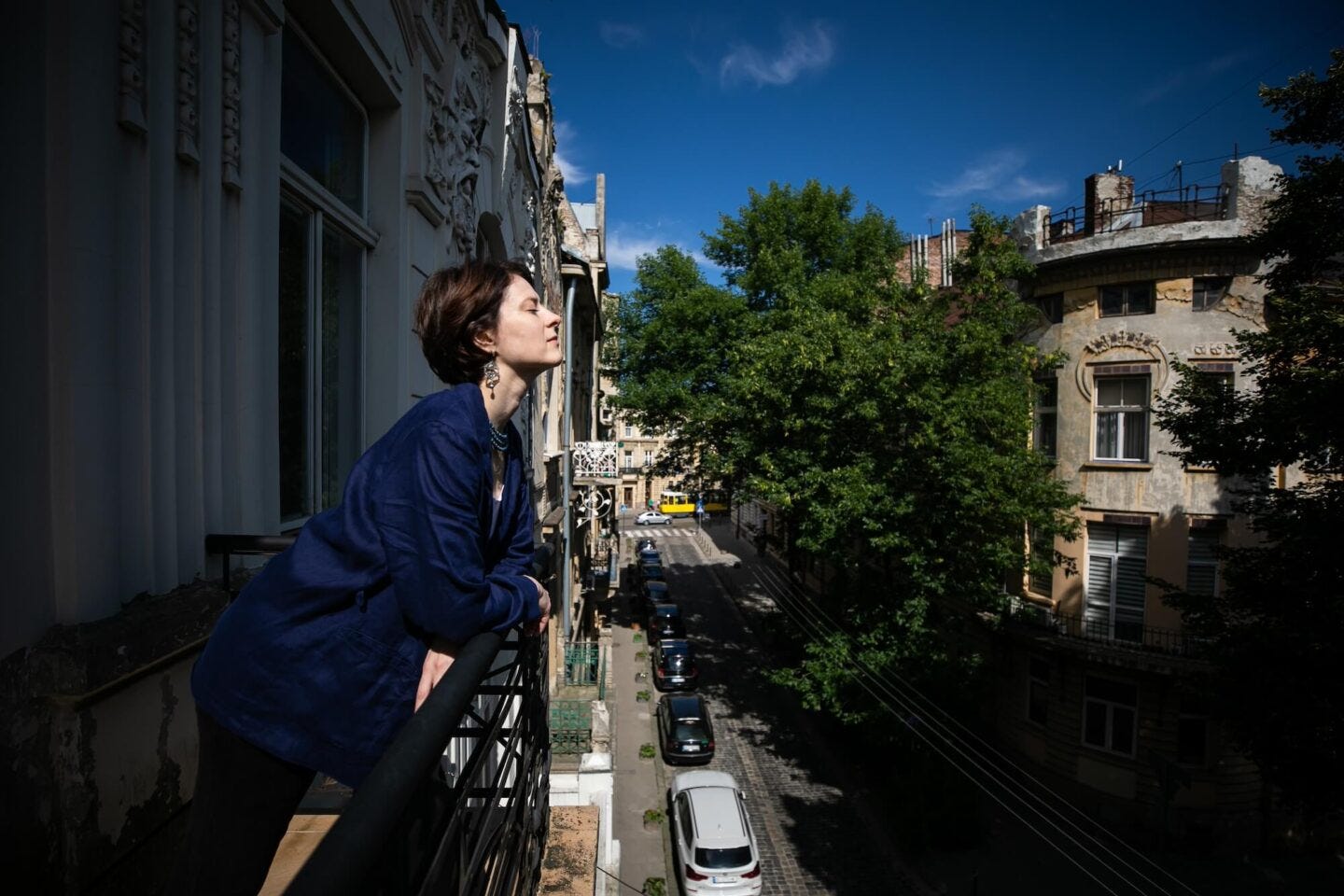
SASHA: Here at INDEX, where I serve as director, our central theme this year was “home.” It resonated deeply because so many Ukrainians have lost theirs. Even for those whose homes are still standing, something has been ruptured. The proximity of death and loss has touched everyone. We are all searching for a home that we will never find exactly as we left it. So we look for home elsewhere, right? In other people, in our work, in our communities. In that sense, the journey that you, I, and many Eastern Ukrainian kids of our generation have taken- the effort to decolonise our upbringing and rediscover our roots- is also a homecoming story. We are returning not to a place, but to an idea of home we are trying to build for ourselves, one beyond the reach of empire.
That is why Zaporizhzhia matters so much to both of us. It stands at the forefront of Ukraine’s fight and has undergone profound transformations during the war. It is also a place of miracles. The boys and girls we grew up with became the people who made the miracle of Ukrainian resistance possible. Nobody expected them to resist, including me. And yet, because of their resistance, I’m still alive.
So yeah, I had to go to Zaporizhzhia to look for these answers. There I encountered another kind of homecoming: seeing the aftermath of the destruction of the Kakhovka Dam. The receding water, the altered banks of the Dnipro, the transformed landscape - that is not the Dnipro that you and I remember. Zaporizhzhia ultimately poses a larger question: what kind of home do we want to rebuild? Do we simply recreate the homeland shaped by generations of imperial or modernisation projects, or do we imagine something new?
Russian Colonialism 101 is the first newsletter to shed light on Russian colonialism and is part of the Volya Hub network. What is happening to Ukraine has happened many times before, and the rest of the world has been conditioned to overlook or misdiagnose it. This isn’t history. It’s how you stop being shocked by what was always predictable.
“I am a big fan of your work and find it accessible for seeing the larger picture that people seem to be misunderstanding—without this digestible explanation of the history—to appreciate empire strategy and mindset at play currently.”
by Jessica Bee, a paying supporter of Russian Colonialism 101.
By popular demand, and for anyone wanting an alternative to supporting this newsletter on Substack or Patreon. Subscribe via Buy Me Coffee.
THIS WEEK’S READING LIST:
This week’s suggestions connect to the interview with Dr Sasha Dovzhyk, so you can explore the Ukrainian context orbiting her work and all the many references we dropped:
Dovzhyk shared her own top-10 list of Ukrainian books translated into English that she recommends: it includes the classics, jewels from the Ukrainian Renaissance, and great examples of the new Ukrainian wartime generation of writers by Kateryna Zarembo, Artem Chapeye, and Artur Dron.
To explore the world of the Ukrainian Baroque:
Explore more: How Ukrainian Baroque was formed and flourished during the times of the Cossacks.
Watch more: Maria Viksnina and her torban, a rare Ukrainian Baroque instrument on its way into classical music.
Listen more: Ukrainian Baroque: Concordacii Animos. Re-recorded works by Mykola Dyletsky and anonymous Ukrainian composers from the early 18th century.
Read more: about Hryhorii Skovoroda, the towering figure of the Ukrainian Baroque. Catching an Elusive Bird by Leonid Ushkalov and Precursor by Vasyl Shevchuk.
To explore the translated Ukrainian classics who wrote at the nexus of European and Ukrainian mythology:
Read more: Cassandra by Lesia Ukrainka, Kobzar by Taras Shevchenko (in the Peter Fedynsky translation), Moses by Ivan Franko, Moses, a ballet performance based on Franko’s poem, Museum of Abandoned Secrets by Oksana Zabuzhko, Six Translated Poems by Moisei Fishbein, Ukrainian Futurism by Oleh S. Ilnytzkyj and Ukrainian Futurism: Re-Appropriating the Imperial Legacy by Oleh S. Ilnytzkyj.
To explore the world of Jewish-Ukrainian literature, from the past to today:
Read more: Jews in Ukrainian Literature by Myroslav Shkandrij, Anti-Imperial Choice: The Making of the Ukrainian Jew by Yohanan Petrovsky-Shtern, Furious Harvests by Alex Averbuch.

REMINDER: If you refer this newsletter to at least three friends, you will receive a month of unlimited access for free.
This is all, folks.
Meanwhile, if you have a follow-up question, an issue for me to investigate, or an interesting lead to share, just stop by our group chat, okay?
Thank you for your support.
The empire will fall.
m.

